How The Escape Game Restored Deliverability and Achieved 35% Open Rates at Scale
Client Overview
The Escape Game operates more than 60 immersive escape-room locations across the U.S., including New York City, Los Angeles, Honolulu, Orlando, and Nashville. The company is known for building cinematic escape adventures that attract more than 10 million guests since their founding.
The company designs and builds all of its games in-house in the Nashville "Adventure Factory". It serves as a creative hub where every game is conceptualized and prototyped before being deployed across its expanding national footprint.
Location
Brentwood, Tennessee (HQ)
Employees
501-1000
ESP Used
HubSpot
List Size
500,00+
Campaigns were executed across multiple regions simultaneously –
-
 Location launches (NYC, Seattle, Chicago, Orlando)
-
Infill campaigns for existing markets
-
National campaigns and promotional sends
-
Newsletter and engagement campaigns
The Main Challenge
The main issue surfaced during high-volume promotional campaigns.
-

Campaign size exceeded
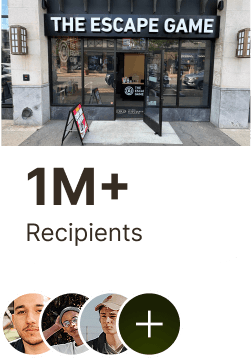
1,000,000+
recipients -
Sending volume increased without ramp-up
-
Infrastructure was not aligned with this scale
Here's what we observed:
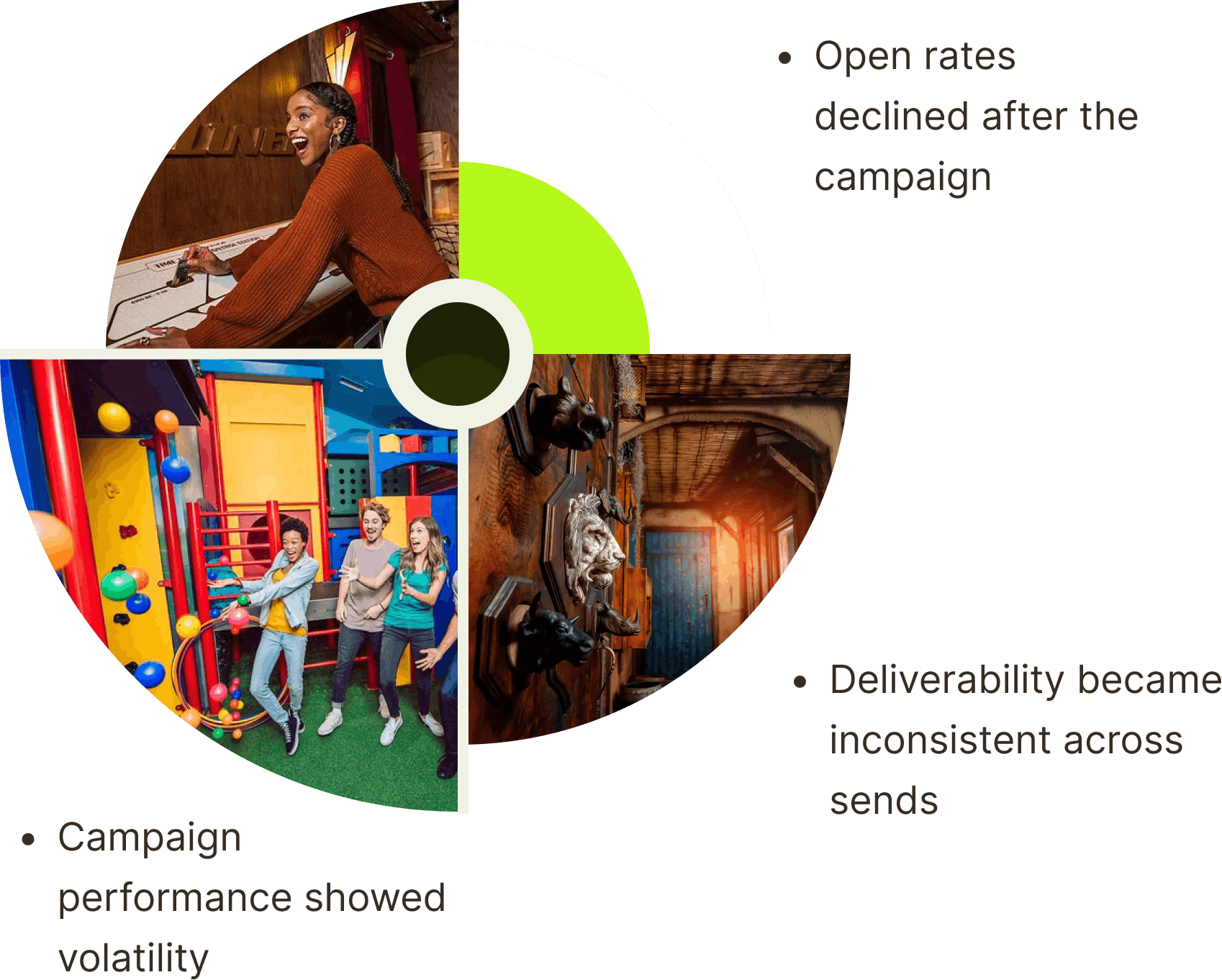
There were some constraints in campaign execution:
-
Multiple campaigns running simultaneously
-
Overlapping campaign schedules
-
No unified sending cadence across campaigns
-
Volume varied across regions and campaign types
The Audit and The Diagnosis
The audit revealed multiple factors contributing to reputation volatility and inconsistent inbox placement.
-
 Domain reputation instability caused by inconsistent sending patterns and sudden volume spikes
-
Reputation fluctuations observed across months, with low performance in July, recovery in September, a decline in November, and stabilization in December
-
IP reputation variability, shifting between high, medium, and low trust levels
-
Sudden volume spikes, which negatively impacted sender reputation and increased filtering risk
-
List quality issues, including a large segment of inactive or unengaged subscribers


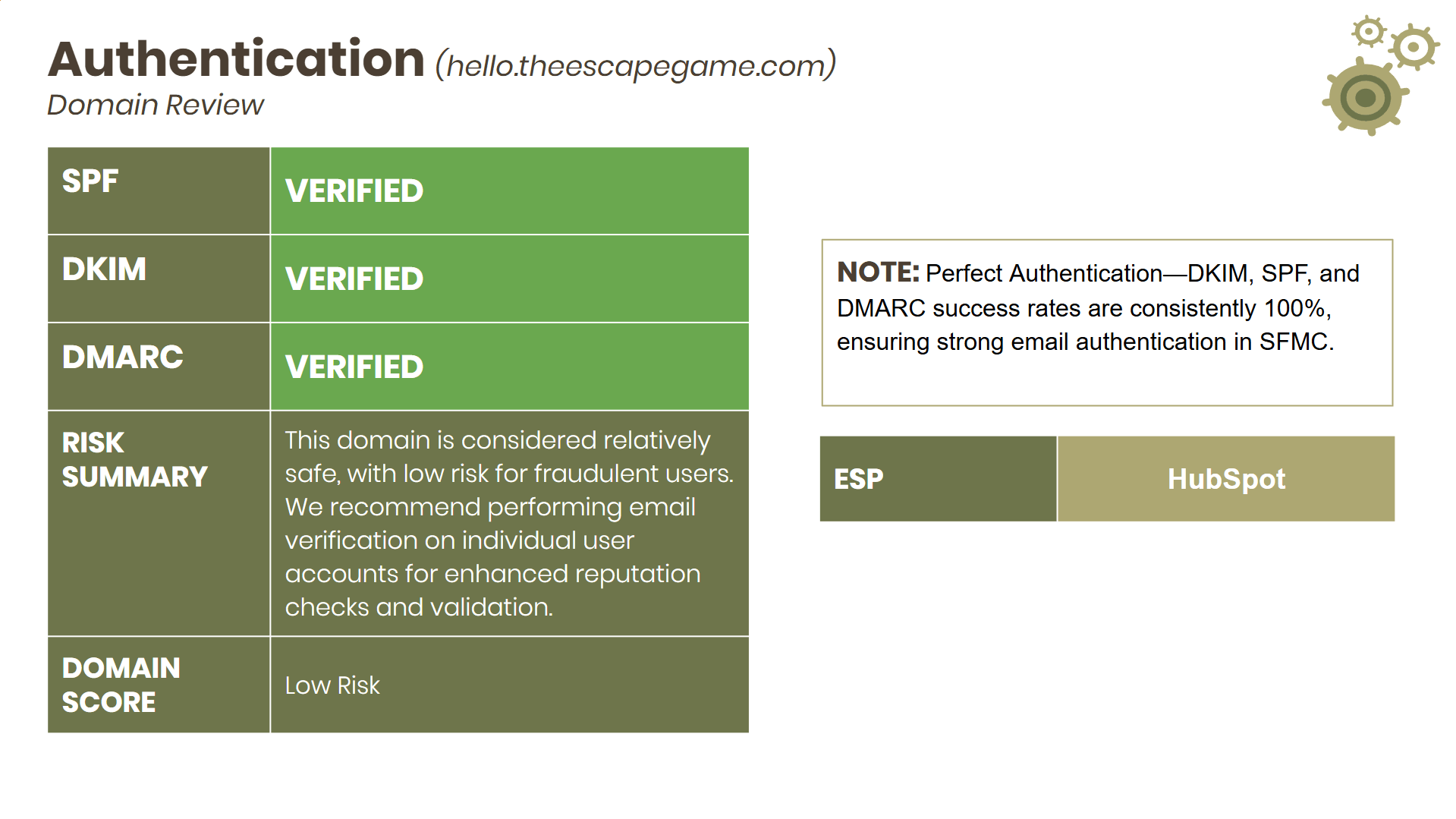
We also identified some gaps in authentication:
-
Header alignment required correction

-
SPF alignment required adjustment
-
DKIM alignment required adjustment
-
Unsubscribe header configuration requires improvement
There were some drops in inbox placement:
-
Inbox placement dropped significantly
-
Weighted inbox placement reached ~28%
Target Inbox Placement Industry Standard Rate:
-
85–95% Inbox Placement Rate = Excellent
-
80–85% Inbox Placement Rate = Good, but room for improvement
-
Below 80% = Needs urgent attention (likely hitting spam folders)
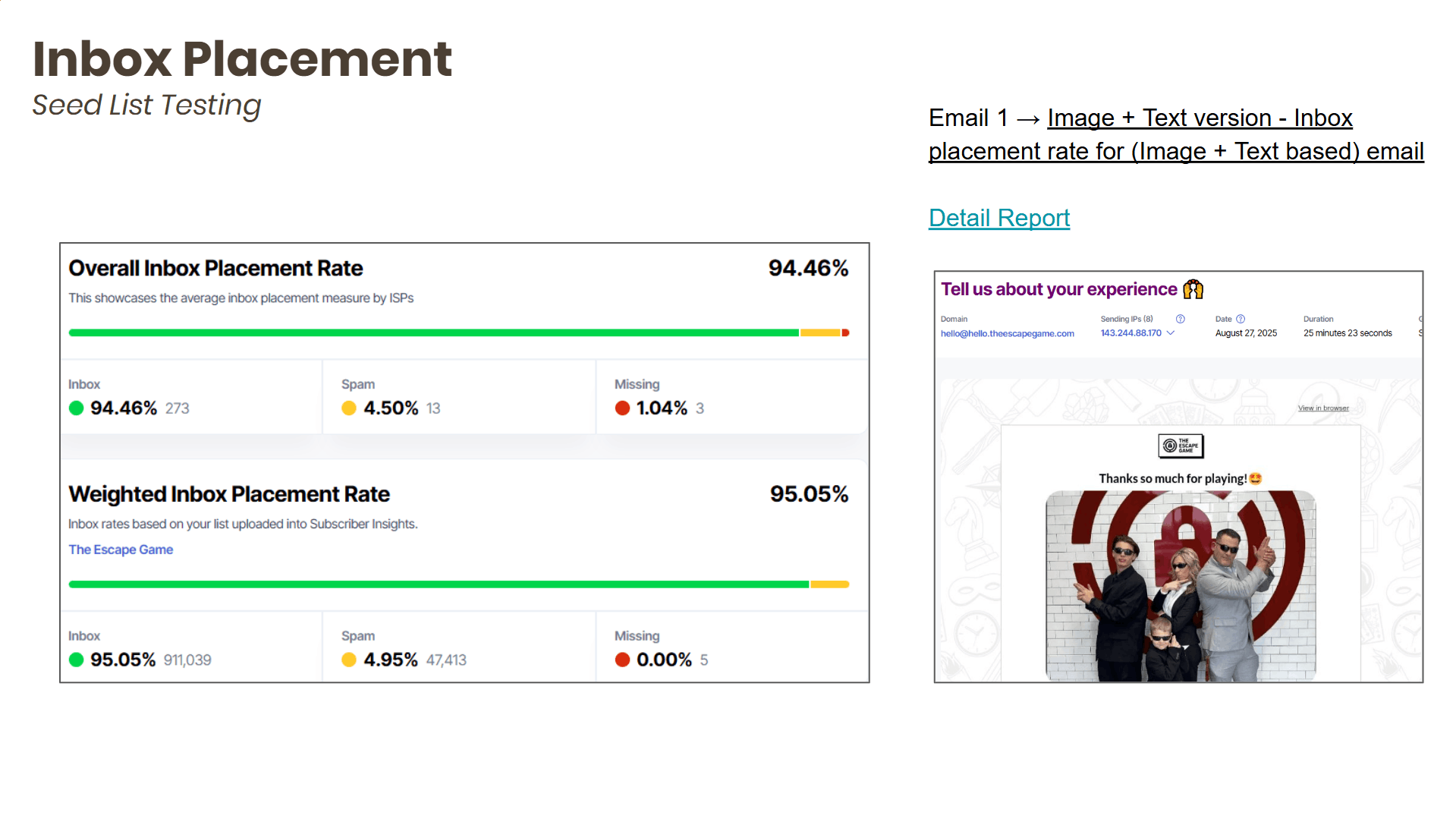
We understood that the problems were caused by the sending behavior under high volume.
But, How Did Their Email Program Scale Impact Deliverability?
The Escape Game's email program operated across multiple campaign types and regions at the same time.
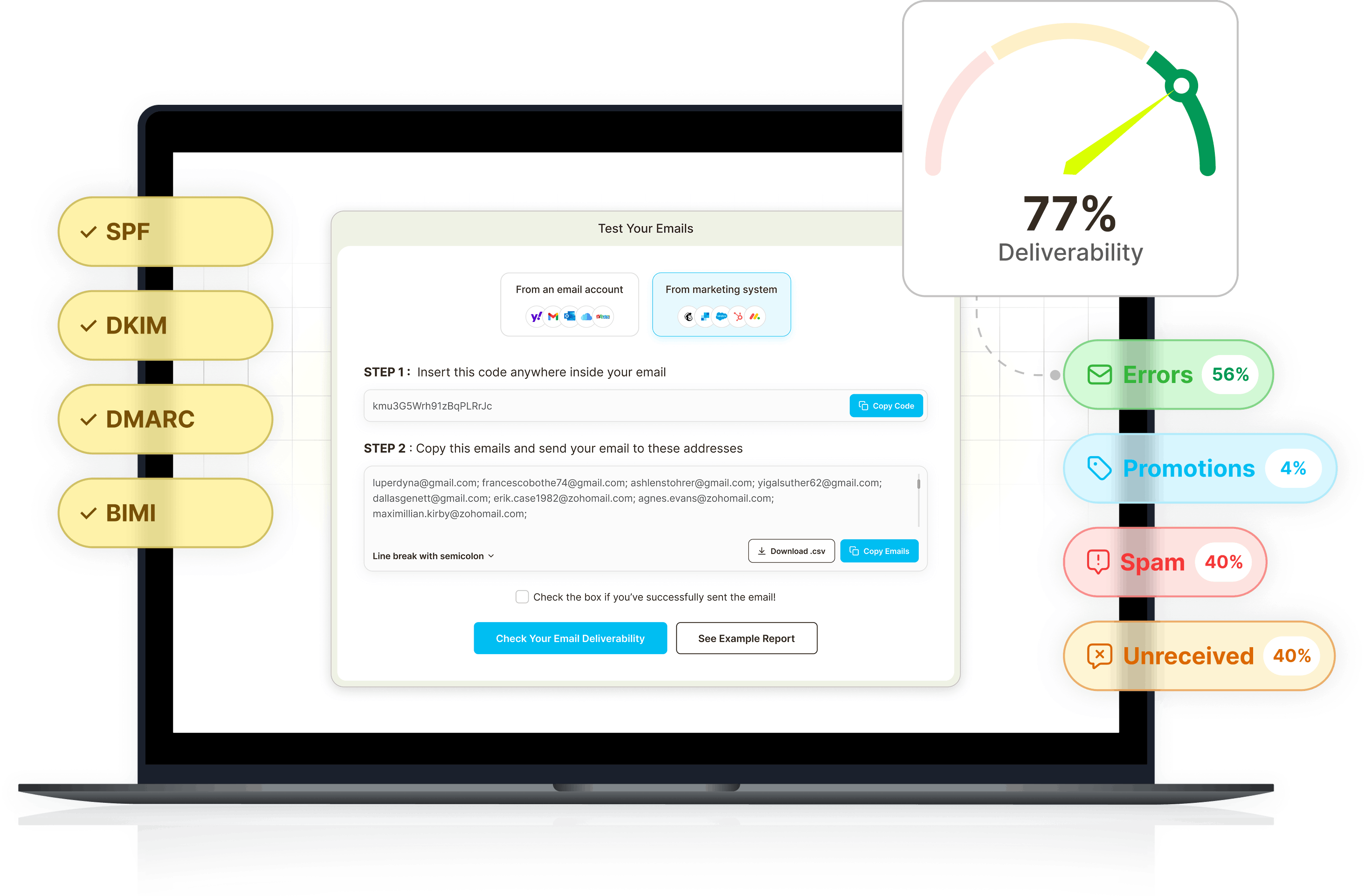
Their various campaign types include
- Location launches (NYC, Seattle, Chicago, Orlando)
- Infill campaigns for existing markets
- National promotional campaigns
Their operational Scale?
- Campaigns executed across multiple cities in parallel
- Region-specific targeting across audiences
- Continuous campaign execution across months
- Multiple campaigns active at the same time
This scale required a system that was capable of handling high-frequency and high-volume sending across multiple workflows.
InboxArmy Eventually Found the Root Cause.
Two primary factors contributed to the decline.
Volume Misalignment
- Immediate jump to 1M+ recipients
- No progressive scaling
- Infrastructure not conditioned for high-volume sends
Cadence Instability Across Campaigns
- No consistent sending intervals
- Campaign clustering across regions
- Overlapping high-volume sends

This created inconsistent sending signals across the entire program.
What InboxArmy Did
InboxArmy implemented a structured remediation plan focused on stability and scale.
Here is how we approached this challenge.
Step 1
Fixed Technical Setup
-
 Corrected header alignment
-
Fixed SPF and DKIM alignment
-
Implemented proper unsubscribe headers
Step 2
Introduced Volume Ramp-Up
-
Started with 200,000 recipients
-
Increased to 400,000 recipients
-
Gradually scaled to full volume


Step 3
Ramp-Up Execution
-
Initial campaigns started at 15,000 recipients
-
Volume increased progressively across campaigns
-
Sending scaled up to 280,000 recipients per campaign
-
Total cumulative volume reached 1,010,000+ recipients
Each campaign increased volume in controlled steps, ranging from:
+15,000 to +50,000
recipients per campaign
Step 4
Structured Campaign Execution
-
Coordinated campaign timing across locations
-
Balanced volume across campaigns
-
Reduced simultaneous high-volume sends
Step 5
Enabled Scalable Sending
-
Broke large sends into smaller batches
-
Introduced gaps between campaigns
-
Created predictable sending patterns

Here's What We Achieved
Two primary factors contributed to the decline.


Performance Improvements
- Open rates improved to 25–35%
- Deliverability stabilized across campaigns
High-Volume Sending
- Successfully sent campaigns to 1M+ recipients
- Batch sending stabilized at 200K-400K per send
Campaign Execution
- Multiple campaigns executed simultaneously without issues
- Regional campaigns maintained consistent engagement
Business Impact
- Revenue increased during peak campaigns
- Achieved nearly 2x year-over-year growth
Key Takeaways
-
Sending volumes above 1M+ require controlled scaling
-
Batch sizes of 200K–400K improve deliverability stability
-
Multi-campaign environments require structured scheduling
-
Consistent cadence strengthens sender reputation
-
Infrastructure must align with both volume and campaign complexity
Conclusion
InboxArmy identified volume misalignment and unstable campaign execution as the primary causes of deliverability issues.
The team implemented structured sending patterns and technical corrections across the entire email program.
Open rates stabilized at 25–35%
High-volume campaigns executed successfully
Multi-campaign workflows became predictable
Email performance transitioned from unstable to scalable across all campaigns.
Interested In Collaborating?
Get in touch today!
Enter your information below to request a free, no-obligation consultation.


“We looked at 16 different agencies, interviewed 8 of them and selected InboxArmy as number 1 pick.”
We hired InboxArmy to redesign Salesforce Marketing Cloud emails. The goal was to create a new master template that matched branding using industry best practices. After we signed the SOW, we had a couple discovery calls, submitted our brief and branding document. Once we were on the same page, InboxArmy did design in batches, we had 3 rounds of reviews and once all was finalized IA coded and implemented the templates for us in MC.
During discovery calls, members of IA were present (covering design and coding). After that we always communicated with our representative, Charlie. Being able to understand branding and our needs, design capabilities, coding pace, responsiveness and always willing to go step beyond for this project.
Felt like IA and we were on the same team.