
Quick Answer
Email list building and growth comes down to two things: first, are you capturing enough of the traffic already hitting your store? Second, do you even have enough traffic to capture? Popups, lead magnets, and post-purchase opt-ins solve the first problem. Organic, paid, and community channels solve the second. Which one you focus on first depends entirely on where your store is right now. The strategies that produce lasting results prioritize value exchange and list quality over raw subscriber volume. A buyer who opts in at checkout is worth more than ten passive subscribers who never open.Introduction
Ask any ecommerce marketer who has been around long enough to watch a Facebook algorithm update gut their organic reach overnight, and they will tell you the same thing: email is the one channel worth building on.
Your Instagram account can get restricted. Your ad account can get flagged. Your TikTok following can disappear if the platform does. But your email list? Nobody can take that from you. You own it outright. That is a level of control that no other marketing channel gives you.
Marketers generate a return of $36-50 for every $1 spent on email marketing. Paid social cannot come close to that.
This guide covers everything you need to build that list: why it matters more now than ever, which strategies work depending on how much traffic you have, how to measure list health, and which tools to use.
Why Email List Building Is Important for ecommerce
Here is something I come back to every time a client asks whether email is still worth prioritizing.
Social media followers are rented. Paid search audiences are rented. Even your SMS list sits inside someone else’s platform with someone else’s rules. One policy change, one account flag, one platform ban, and that audience is gone. We have seen it happen to brands that spent years building their social presence.
Your email list is different. It is yours. The platform cannot revoke it. The algorithm cannot bury it. And unlike paid channels, where your cost per acquisition climbs every year, the economics of email improve as your list grows.
The numbers back this up. Klaviyo’s Omnichannel Benchmarks Report found that email campaigns drive around 59.2 percent of revenue for ecommerce brands.
First-party data is another reason list building has become more critical. With Apple’s Mail Privacy Protection and ongoing third-party cookie deprecation, retargeting audiences on paid channels is getting less precise and more expensive. Your email list is first-party data you collected with consent. It is the cleanest audience you have.
Ecommerce Email List-Building Strategies
Most advice on this topic starts with tactics: set up a pop-up, create a lead magnet, and run a paid campaign. What it skips is the more important question: Does any of that actually apply to where your store is right now?
When I work with a new ecommerce client, the first thing I want to know is their monthly session count. Because if the answer is 2,000 sessions a month, optimizing a pop-up is not the priority. Getting traffic is. These are two different problems, and they need two different plans. I use a two-track framework with the ecommerce clients at InboxArmy:
- Track 1 – Convert existing traffic: Your store already gets consistent monthly visitors. Then, for the ecommerce brands, the priority must be to capture a large portion of those visitors before they leave.
- Track 2 – Build traffic first: If your store is early-stage or monthly sessions are on the low side of visitors. On-site tools alone will not produce meaningful list growth. You need to build an audience first.
Track 1: Converting Your Existing Traffic Into Subscribers
From our experience working with ecommerce brands with steady traffic, targeting different moments in the visitor journey leads to conversion.
Example: A home décor store is getting 12,000 sessions a month, but only 0.4% of visitors are opting in. That is 48 subscribers a month from traffic that should be producing 360 to 960. The traffic is there. The capture infrastructure is not.
This store needs better pop-ups, a stronger lead magnet, and a checkout opt-in, not more traffic.
Strategy 1: How Do You Optimize On-Site Popups for Maximum Conversions?
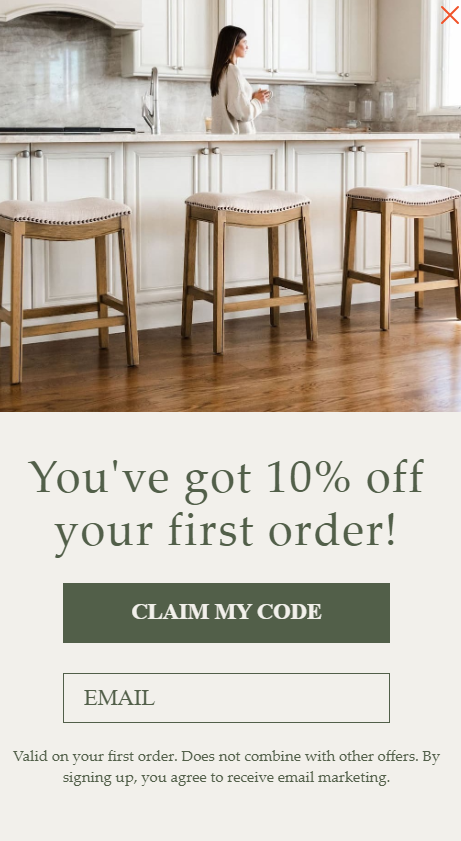
ecommerce businesses with a well-set-up pop-up can convert somewhere between 3 and 8 percent of their visitors. However, visitors clicking on it all comes down to the offer, the timing, targeting rules, and how well it works on mobile.
Source
On timing: one of the most common things I see when auditing a new client’s setup is a pop-up firing the moment someone lands on the page. Before they have read a single word. Before they have any reason to trust you or want what you are offering. That is not list building. That is just annoying people into leaving faster.
What to do instead:
- Trigger after 30 to 45 seconds on the page, OR
- Trigger after 40% scroll depth
On targeting: showing the same pop-up to everyone can lead to underperformance.
Segment by:
Visitor type: New visitors get the welcome offer. Returning visitors who have not subscribed get a different message.
Page type: Product pages convert better with product-specific offers. The homepage is a different conversation.
Traffic source: Someone arriving from a branded Google search already knows you. A cold Meta ad click does not. Treat them differently.
Example: “Get 10% off your first order of running shoes” on a running shoes product page will outperform a generic “Join our newsletter for 10% off” sitewide popup. Same discount. Same page. Different framing.
On mobile: Statista data puts mobile at roughly 60 percent of ecommerce traffic globally. If your pop-up covers the entire screen with a small close button, you are not building a list. You are just increasing your exit rate.
Optimization checklist for on-site pop-ups:
- Delay trigger: 30 to 45 seconds on page or 40 percent scroll depth. Not on page load.
- Offer specificity: specific discounts that make it feel like it was written for that visitor
- Targeting and segmentation: A single pop-up won’t work for every visitor. Different pages, traffic sources, and audience segments should trigger different messages and offers.
- Mobile design: Keep mobile popups easy to use with a full-width bottom banner, large tap-friendly buttons, and a clearly visible close option that doesn’t require scrolling.
- A/B testing: Test one element at a time. Start with the headline, move on to the offer, and then experiment with CTA copy so you can clearly measure the impact of each change.
- Suppression: hide for 14 to 30 days after someone subscribes or converts
Strategy 2: What Lead Magnets Actually Work for ecommerce?
The highest-converting lead magnets in ecommerce are immediately useful and tied directly to a purchase decision. A visitor who is 20 minutes into browsing a product category does not want a PDF guide on industry trends. They want help making a decision right now.
On welcome discounts: I get asked about these constantly, and my honest answer is that it depends.
For a store with a $40 AOV, a 15 percent welcome discount is a reasonable acquisition cost. For a furniture brand with a $900 AOV, you are giving away $135 to a subscriber who probably would have bought anyway. That math does not work.
In higher-AOV categories, a free shipping threshold almost always outperforms a percentage discount, both in opt-in rate and in what it costs you. It is worth testing before defaulting to the discount.
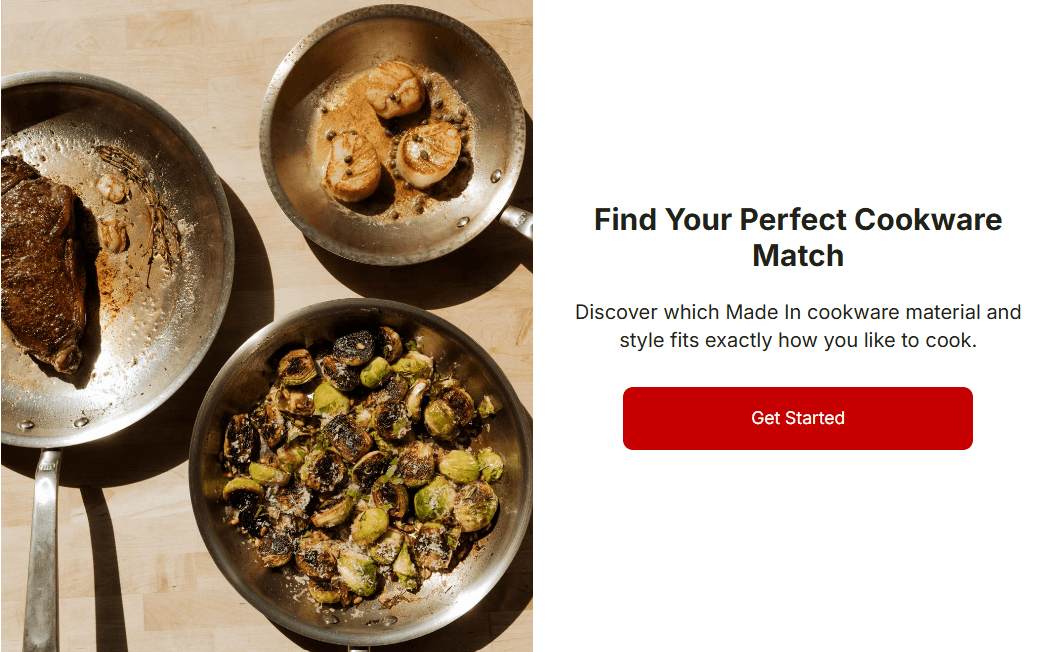
On quizzes: These are genuinely underused, and I think it is because they require more setup than a pop-up. But the payoff is real. Among visitors who complete a quiz, opt-in rates of 40 to 60 percent are common.
Source
Compare that to 3 to 8 percent for a standard pop-up, and the case for building one becomes obvious, especially if your store carries a wide range of products and you want segmentation data from day one.
The Soccer Wearhouse team saw exactly this kind of lift when they shifted focus to matching subscribers to specific product categories early. That segmentation discipline was one of the contributing factors to the 151% ROI they achieved through their email campaigns.
| Lead Magnet Type | Best For | Relative Conversion | Margin Impact |
| Welcome discount (10-15% off) | All ecommerce niches | High | Moderate (watch CAC) |
| Free shipping threshold | Mid-to-high AOV stores | High | Low to moderate |
| Product finder quiz | Stores with a wide SKU range | Very high among completers | None |
| Buying guide/size guide | Fashion, outdoor gear, tech accessories | Moderate | None |
| Early access to sales or launches | Brands with loyal repeat buyers | Moderate to high | None |
| Loyalty program enrollment | Stores with a repeat purchase model | High | Dependent on program structure |
Strategy 3: How Do You Use Exit-Intent and Timed Popups Effectively?
Exit-intent popups can recover 10 to 15% of abandoning visitors. Two conditions have to be true for that to happen:
- The offer is relevant to what they were browsing
- They have not already dismissed a pop-up in the same session
The sequencing rule:
If a visitor has already passed on your main pop-up, showing them the identical offer as they leave will not change their mind. The exit-intent pop-up needs to do one of two things:
- Offer something different (“Free shipping” instead of “10% off”)
- Get more specific to what they were browsing (“Still thinking about the leather sofa? Here’s 10% off that collection”)
On a desktop, exit-intent detection works by tracking cursor movement toward the browser bar. It is less reliable for mobile visitors because there is no similar signal. In such cases, a timed pop-up at 60 to 90 seconds, or a scroll-back trigger when the visitor scrolls back up to the top of the page, works as opposed to exit intent.
Suppression rules for exit-intent popups:
- Do not show to visitors who have already subscribed in this session or any previous session
- Do not show to visitors who have already completed a purchase
- Limit to one display per visit, with a minimum 7-day gap between displays for the same visitor
- Exclude product pages where the visitor has already added to cart (they are already converting)
Strategy 4: How Do Checkout and Post-Purchase Opt-Ins Build Your List?
At checkout:
The subscribers I care most about are the ones who opted in at checkout. Not because they found your pop-up compelling. Because they pulled out their card and bought something.
Across the accounts we manage at InboxArmy, buyer subscribers consistently show 2 to 3 times the lifetime value of non-buyer subscribers acquired in the same period.
On the post-purchase confirmation page:
Purchase intent peaks right after a transaction completes. Most brands use this page only to confirm the order. What you can add here instead:
- Loyalty program enrollment CTA (“Join and earn points on this order”)
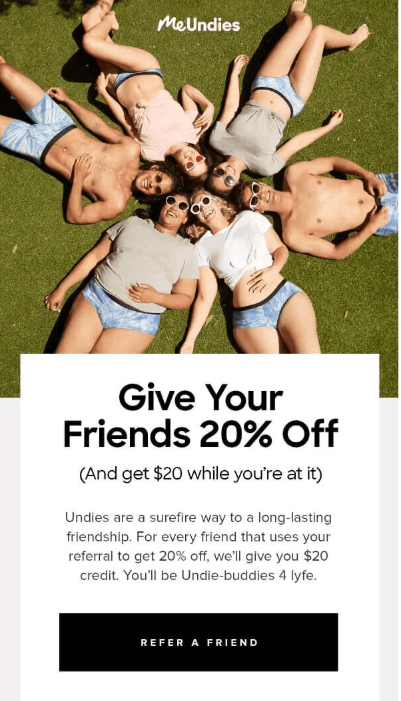
- Referral invite (“Give $10, get $10”)
- Early access opt-in (“Sign up to get first access to our next launch”)
- SMS opt-in alongside the email confirmation
On transactional emails:
Order confirmations and shipping notifications have open rates above 60% according to Klaviyo’s email benchmarks. Most brands use them only to confirm the order. What you can add:
- A preference center link (“Tell us what you want to hear about”)
- A product recommendation tied to what they just bought
- A referral CTA while purchase satisfaction is at its highest
Most brands we audit have never set up a post-purchase sequence at all. They send the order confirmation, the shipping notification, and then nothing until the next broadcast campaign.
Maven Lane had the same gap when they came to us. No automation to engage buyers after the transaction was complete. After we built one, the post-purchase sequence generated $20,024 with a 76.18% open rate.
Track 2: How to Build an Audience When You Do Not Have Enough Traffic Yet
ecommerce brands with low sessions (3000 to 5000 per month) must build an audience before they can convert it and utilize it for email marketing. All the marketing channels available for a business offer diverse pricing and pacing.
Example: A new candle brand, three months after launch, is averaging 900 sessions a month. Even if they built the perfect pop-up tomorrow, at 5% conversion, that is 45 subscribers a month.
At that volume, the list will not produce meaningful revenue for a long time. This store needs to build an audience first through organic social, collaborations, or paid campaigns before on-site tools become the priority.
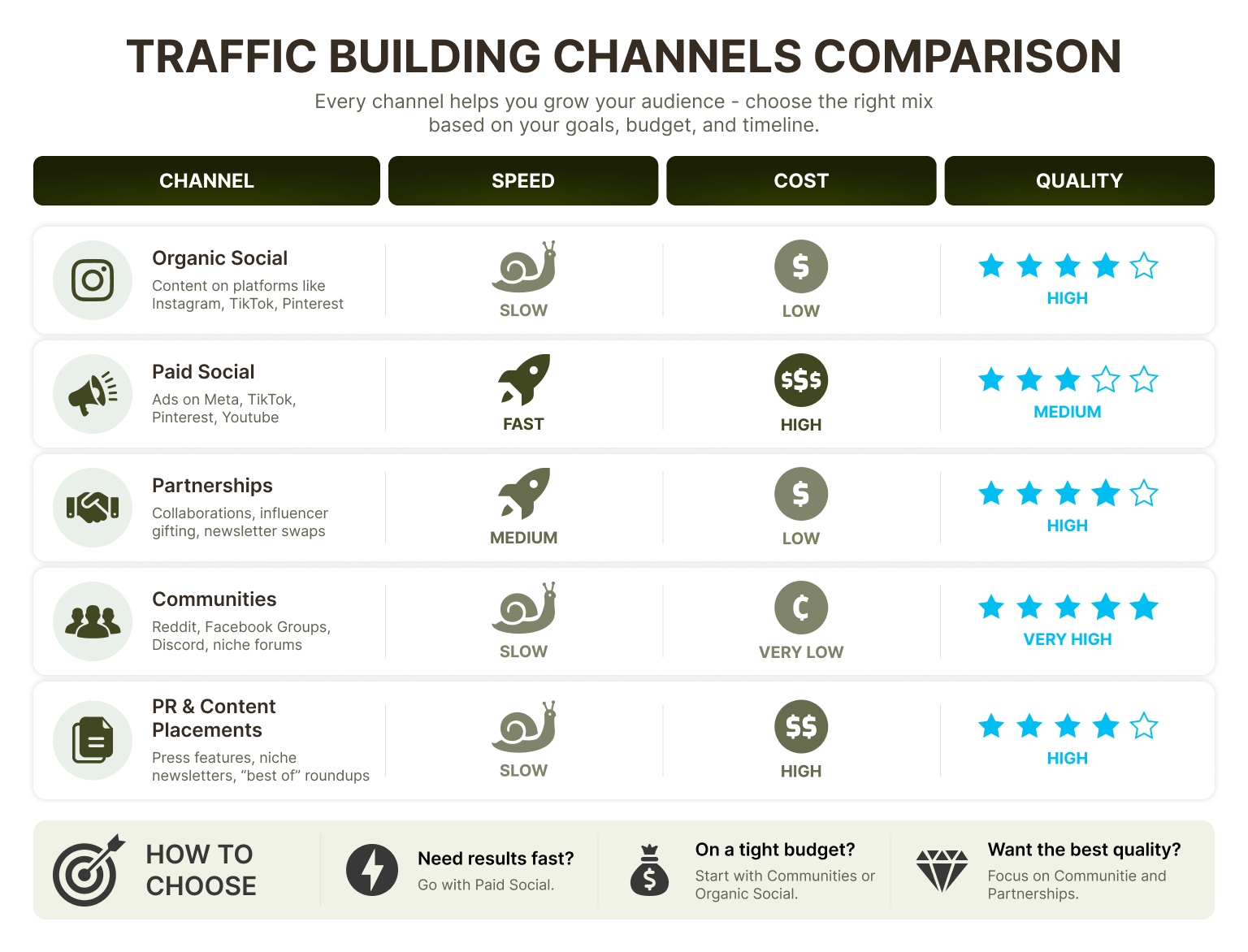
Strategy 5: Organic Social: The Slow Build
The content that grows an ecommerce audience on Instagram, TikTok, or Pinterest is not product promotion. It is category content. Tutorials. Comparisons. Behind-the-scenes production.
“How we made this.” Honest product reviews. An audience unfamiliar with your brand. The more specific the offer, the better it converts.
Organic social list growth is slow. Most stores building from zero will add subscribers in the dozens per month from this channel alone. It works best paired with something else.
Strategy 6: Paid Social
Meta Lead Ads and TikTok Lead Generation allow the target audience to sign up without switching to another platform. This seamless experience means lower cost per lead compared to sending traffic to an external landing page. For stores where the subscriber lifetime value supports it, paid social is the fastest way to add subscribers at volume.
The cold subscriber problem:
Paid social subscribers are not like organic ones. They signed up because an offer appeared in their feed at the right moment. They do not know your brand. They have no particular reason to stick around.
What this means in practice:
- Do not send them a promotional email as your first touchpoint
- Your welcome sequence needs to deliver genuine value before it asks for anything
- The brands that convert paid leads into buyers treat the welcome sequence as a relationship-building tool, not a sales sequence
A paid subscriber who gets three emails of useful content before a purchase offer will convert at a significantly higher rate than one who gets a discount code on day one and nothing else after that.
Strategy 7: Collaborations and Cross-Promotions
Partnering with complementary brands or creators who already have your audience is one of the more efficient channels available to stores that are still building.
Newsletter swaps
- Works best between brands with overlapping but non-competing audiences
- One dedicated feature in each other’s sends, one time
- Subscribers from a well-matched swap are often higher quality than paid leads because they came in through a trusted recommendation
Good pairings:
- Running gear store + marathon training coach newsletter
- Kitchenware brand + recipe newsletter
- Kids’ clothing brand + parenting blogger newsletter
Micro-influencer gifting
- You send the product at cost
- They post an honest review with your opt-in link or discount code
- ROI depends on audience match, not follower count

Co-giveaways
- Both brands drive traffic to a shared landing page
- Entry requires an email opt-in
- Can add hundreds of qualified subscribers in a short window
What to check before agreeing to a co-giveaway:
- Does their audience match your target customer?
- What is their engagement rate, not just follower count?
- Will they promote to their email list or only to social followers?
Reddit, Facebook Groups, and Niche Communities
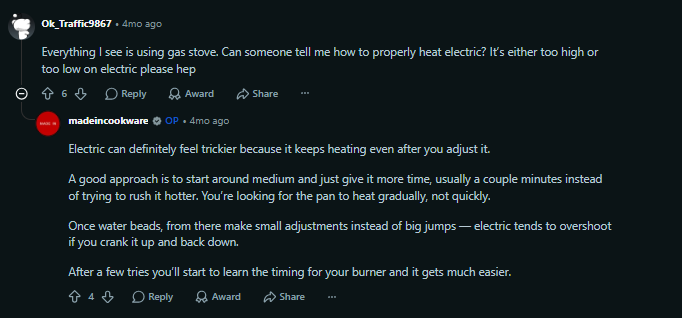
This channel is underestimated mostly because it does not scale the way paid social does. But for early-stage stores, it is one of the highest-quality sources of subscribers available.
Subreddits, Facebook groups, niche forums, and Discord communities specific to your product category contain buyers who have already self-selected as interested in exactly what you sell. The approach is not promotion. It is participation. Answer questions.
What genuine participation looks like in practice:
Someone in a hiking subreddit asks, “What base layer is worth the money under $80?” You answer with a specific recommendation, whether it is your product or not
A Facebook group member asks about caring for leather furniture; you share the actual method, no brand mention required
A Discord member posts about sizing confusion, and you walk them through it
What not to do:
- Post your opt-in link in threads uninvited
- Ask the moderator for permission to advertise
Strategy 8: PR and Content Placements
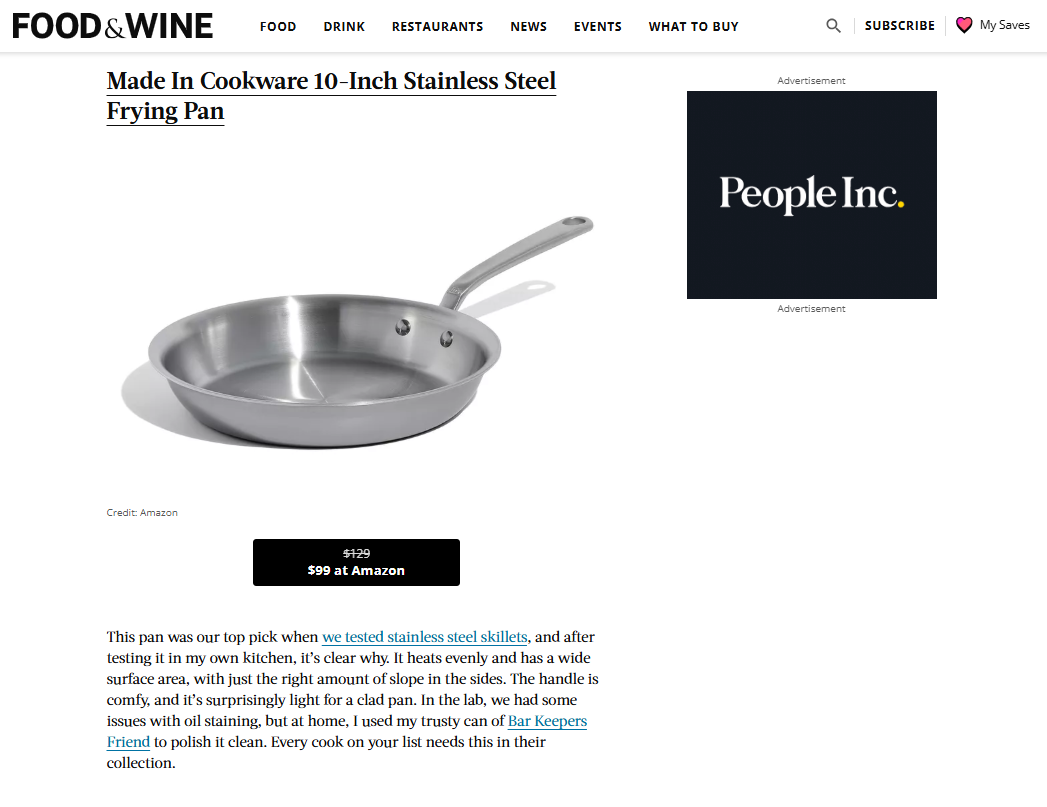
Getting featured in the right niche newsletter can drive more qualified signups in a single day than a month of organic social activity. Someone reading a “best products for X use case” roundup is actively in a buying mindset. A well-placed mention there puts you in front of purchase-ready readers.
Target niche newsletters over large general publications. “Best of” and comparison content on established niche blogs also drives organic traffic over time.
Strategy 9: In-Person and Offline List Building
If your brand functions at markets, pop-ups, trade shows, or any physical retail context, the email addresses collected here can score high on both quality and quantity. The trust level is different for people who have already engaged with your brand in person
Three ways to collect emails in person:
- QR code on booth signage linking to an opt-in page with a clear incentive (“Scan for 15% off your next order”), lowest friction, works at any booth size
- A tablet running an opt-in form at the counter or check-in point is better for higher-traffic environments like pop-up shops or trade show booths
- Receipt or packaging insert opt-in: print a QR code on your packaging or order receipt; captures buyers who might never find your website independently, and costs nothing to add
How to Measure Email List Growth
Building an email list is only the first step. Working with an ecommerce email marketing agency can help you develop a strategy to engage subscribers and turn them into customers.
I want to say something about list size because I think it misleads a lot of brands.
A list of 50,000 unengaged subscribers is not an asset. It is a liability. It damages your sender reputation, inflates your ESP bill, and produces open rates that make your program look like it is failing when the real problem is that half your list should have been suppressed six months ago.
The number that actually matters is how many people on your list are opening and clicking. A clean list of 8,000 active buyers will outperform a bloated list of 50,000 cold names every single time.
Here are the metrics I track for ecommerce clients and the benchmarks I use to evaluate list health:
| Metric | What It Measures | Benchmark |
| List Growth Rate | Month-over-month % increase in net subscribers | 5-10% MoM for early-stage stores |
| Engaged Subscriber Rate | % of the list that opened or clicked in the last 90 days | 20-30% engaged is a healthy baseline |
| Revenue Per Subscriber (RPS) | Total email revenue divided by list size | Benchmark varies by niche; track trend over time |
| Unsubscribe Rate | % unsubscribing per campaign send | Below 0.2% per send is acceptable |
| Spam Complaint Rate | % of recipients marking email as spam | Below 0.08% (Google/Yahoo 2024 sender threshold) |
| Churn-Adjusted Growth | New subscribers minus unsubscribes in the same period | The real growth number: positive means the list is actually growing |
Tools for ecommerce Email List Building
Most ecommerce stores need four categories of tools:
- Email service provider
- Opt-in and pop-up tool
- Quiz or lead capture tool
- Analytics
| Category | Tool | Best For | Pricing |
| Email Service Provider | Klaviyo | Mid-to-large ecommerce, deep Shopify and WooCommerce integration | Paid; scales with list size |
| Email Service Provider | Omnisend | Smaller stores, combined email and SMS | Free tier available |
| Email Service Provider | ActiveCampaign | Stores needing advanced segmentation and CRM | Paid from $15/mo |
| Popup and Opt-in | Privy | Shopify-native, beginner-friendly setup | Free + paid tiers |
| Popup and Opt-in | Justuno | Advanced behavioral targeting and personalization | Paid |
| Popup and Opt-in | OptiMonk | A/B testing, exit-intent, timed triggers | Free + paid tiers |
| Quiz and Product Finder | Octane AI | Shopify quiz funnels, segmentation from quiz data | Paid |
| Landing Pages | Replo | Shopify-native landing pages for paid campaigns | Paid |
| Referral and Loyalty | Smile.io | Loyalty-driven list building, point programs | Free + paid tiers |
| Referral and Loyalty | Yotpo Loyalty | Enterprise loyalty and referral programs | Paid |
| Analytics | Google Analytics 4 + ESP native | List source attribution, conversion tracking | Free (GA4) |
| HTML Email Checker | InboxArmy | Test email templates for rendering issues | Free |
| Email ROI Calculator | InboxArmy | Calculates expected return from email program | Free |
| Email Deliverability Test | InboxArmy | Checks whether emails are landing in the inbox or the spam folder | Free |
Start With One Strategy, Not Eight
Every time I talk to a new ecommerce client who is frustrated with their email results, the story is usually the same. They set up a pop-up, added a lead magnet, started a referral program, ran a paid campaign, and tried to get on a podcast all at the same time. None of it was done well because the attention was spread too thin.
Pick one thing. Do it properly. A single pop-up with a specific offer and the right targeting rules will produce better results than five tactics running half-finished in parallel.
If you are on Track 1, start with the pop-up and the lead magnet. Get your opt-in rate above 4 percent before touching anything else. If you are on Track 2, commit to one audience-building channel for 60 to 90 days. That is long enough to know whether it is working.
The stores worth learning from are not the ones with the most tactics. They are the ones who built the subscriber-to-buyer path before they worried about volume.
FAQ
How often should I email my list once I have built it?
Start with one to two broadcast campaigns per week alongside your automated flows. Increase during promotional periods. Watch where your open and click rates start dropping and pull back just before that threshold. Frequency tolerance varies a lot by niche and by how well you are segmenting.
Is buying an email list ever a good idea for ecommerce?
No. Purchased lists damage the sender’s reputation immediately because those addresses never consented to hear from you. Spam complaint rates spike, deliverability suffers across your entire list, and in GDPR markets, you are in breach of the regulation. Time spent building a list through any legitimate channel will always produce better long-term results.
What is the difference between a subscriber and a contact in Klaviyo?
A contact is any profile in your Klaviyo account, regardless of consent status. A subscriber has actively opted in to receive marketing emails. You are billed on active profiles, and your deliverability metrics are measured against subscriber engagement.
How do I avoid spam folders?
Most deliverability problems come from bad lists, not bad software. If people don’t open your emails, mailbox providers notice it. Authenticate your domain, stop emailing inactive subscribers, and never buy lists. Get those basics right, and you’re ahead of most stores.
How long does it take to build an email list from scratch?
It can take weeks to months. The first few hundred subscribers are usually the hardest because nobody knows who you are yet. Once traffic starts growing and customers begin sharing your products, list growth becomes much easier.