

Quick Answer
Choosing the best email marketing platform depends on the business, their needs, and target audience. Omnisend or Klaviyo is the right email marketing tool for ecommerce brands on Shopify or WooCommerce. B2B companies with long sales cycles can opt for HubSpot, which offers CRM and email marketing features within the same platform. Complex, multi-step nurture email sequences require ActiveCampaign. For budget-conscious small businesses, Brevo, MailerLite, or Moosend provide affordable email marketing solutions. Kit or Beehiiv is the suitable choice for creators and newsletter writers. Pricing at 1,000 contacts ranges from free to around $50 a month across most email marketing services. Once your email list reaches 10,000 contacts, email plans rise considerably.
Twenty-seven years working in email marketing and marketing automation have taught me that the best email marketing platform is rarely the one with the longest feature list.
I’ve spent my career building product marketing programmes, leading customer success and account strategy, planning ESP migrations, rebuilding lifecycle automation, and solving deliverability problems for businesses across retail, healthcare, ecommerce, fashion, B2B, and more. From what I’ve seen and learnt, the right email marketing service depends on your company’s business model, team, and growth stage.
Every week, our team helps brands, from Boie to London Store to RC Juice, migrate platforms, build automation programs, and improve email performance. That gives us a practical view of how these platforms perform long after the sales demo ends.
So, in this blog, we are not going to suggest a single solution that works across the board. Instead, we will analyze each contender based on their features, what I liked working with them, their drawbacks, and whether the pricing plan will fit your budget.
What to Look for in an Email Marketing Platform
When we suggest email marketing platforms to clients, we look specifically at features that can streamline the automation, segmentation, and delivery of emails.
Editor quality: Every modern email marketing tool now has a drag-and-drop builder. The real gap between platforms shows up in template quality and design flexibility. Beyond generic layout, brands must be able to build email designs that suit their image.
Automation that scales with the business: A workflow builder needs to handle branching logic without breaking. We opt for automated email marketing solutions where contacts move through the email workflow seamlessly without manual follow-up at every turn. Linear autoresponders require rebuilding once the business grows.
Built-in list growth tools: An email list doesn’t grow itself. Sign-up forms and landing pages built into the email marketing platform forgo a separate list-building tool.
Behavior-based targeting: No matter how good the email list is, you can’t send everyone the same email. We segment contacts by behavior and engagement, beyond just demographics. From our experience, it actually drives open rates and conversions higher.
Flexible pricing plans: A low entry price looks appealing right up until a list crosses 10,000 contacts and the bill quadruples. When we are recommending an email marketing solution, the pricing must support the client’s growth.
Inbox placement and send capacity: Authentication, list hygiene, and sending consistency matter for successful email marketing.
Integration depth with ecommerce and CRM systems: Shallow integrations leave gaps in revenue attribution. This is one we check closely on every migration
How fast a new hire gets productive: A shorter learning curve is vital for teams without a dedicated email specialist. An email automation platform chosen purely for its feature list can still leave a new hire building campaigns by trial and error months in.
How We Evaluate Email Marketing Software
We have experience handling migrations, lifecycle programs, deliverability projects, and email automation across more than 40 ESP vendors. We have worked with over 5000 brands across 25+ sectors ranging from small ecommerce stores to enterprises. This helps us evaluate email marketing services and know where marketing copy and day-to-day reality don’t quite match.
- Pricing at scale, not what the free plan or first tier offers
- Automation depth, including whether the workflow builder handles branching logic without breaking
- Deliverability, because email design and content only matter if they successfully reach the recipient’s main inbox
- Ease of use for teams without a dedicated email specialist
- Integration depth with existing e-commerce or CRM systems
- Support quality during migration
Best Email Marketing Platforms at a Glance
| Platform | Best For | Automation | AI Features | CRM | Ecommerce Fit | Starting Price |
| Omnisend | Ecommerce | Strong | Yes | No | Excellent | $16/mo |
| HubSpot | B2B with CRM needs | Moderate–strong (full workflows on Pro+) | Yes | Built in | Limited (via ecommerce integrations) | $15–20/mo per seat |
| Klaviyo | Larger ecommerce lists | Strong | Yes | No | Excellent | $20/mo |
| ActiveCampaign | Advanced automation | Very strong | Yes | Built in (sales features on higher tiers) | Moderate (via ecommerce integrations) | $15–19/mo |
| Brevo | Budget-conscious teams | Moderate | Basic AI (writing assistant | Basic built-in CRM | Moderate | $9/mo |
| Mailchimp | Simple newsletters | Basic | Limited | No | Moderate | $13–20/mo |
| GetResponse | Webinars and multichannel | Moderate | Yes | No | Moderate | $19/mo |
| MailerLite | Solo marketers | Basic | Basic | No | Limited (basic site + store for small teams) | $9–10/mo |
| Kit (ConvertKit) | Creators and newsletters | Basic | Basic | No | Limited (digital products/subscriptions) | $0–39/mo |
| Moosend | Small business budget pick | Moderate | Yes | No | Moderate | $7–9/mo |
| Constant Contact | Events and nonprofits | Basic | Yes | No | Limited | Around $12/mo |
| AWeber | Bloggers | Basic | Basic | No | Limited | $12.50–15/mo |
| Sender | Generous free plan | Moderate | No | No | Limited | $7/mo |
| Beehiiv | Newsletter monetization | Basic | Basic | No | Limited | $43–49/mo |
| Mailjet | Newsletters and email API | Moderate | Basic | No | Limited | $9/mo |
| Campaigner | Email plus SMS automation | Strong | No | No | Moderate | $14–59/mo |
| Benchmark Email | Simple sending for beginners | None | Basic | No | Limited | Free–$37/mo |
Best Email Marketing Platform Review
Omnisend
Omnisend email marketing tool is built around the actual shopping journey, making it suitable for ecommerce businesses. Its omnichannel piece stands out most. A single workflow can send an email, wait a day, and follow up with an SMS if nobody opened it. Building that same logic manually in a tool like Zapier rarely runs as cleanly as Omnisend’s native version.
Beyond email automation and campaign building, Omnisend includes over 350 templates geared toward product promotion. The platform also supports sign-up forms and popups built for list growth. The AI-powered segment builder lets a marketer describe an audience in plain language and get a working segment back. We found its web store integrations quite helpful for leveraging customer data for targeted and personalized email campaigns. They also have Customer Lifecycle Map to categorize shoppers based on frequency, spending patterns, and recency. This enables us to make informed decisions when nurturing customers.
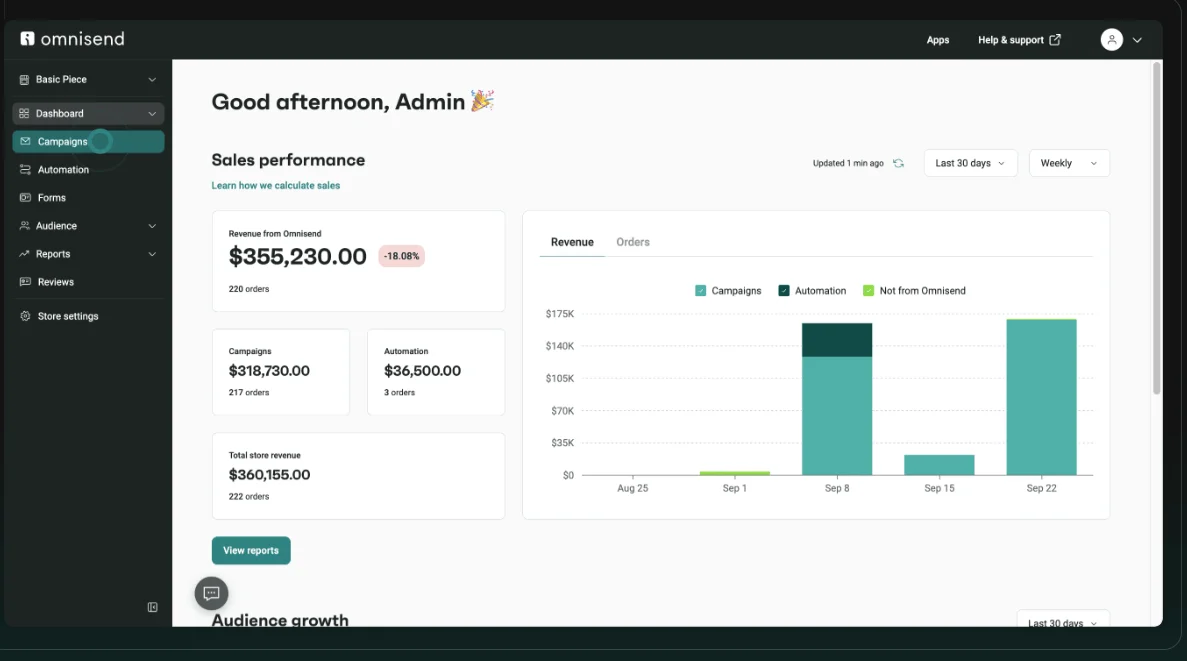
Best for: Ecommerce brands on Shopify or WooCommerce
Pros
- Pre-built automations for abandoned cart emails, browse abandonment, post-purchase, and win-back sequences
- Native email and SMS marketing combined in one workflow
- AI-powered natural language segment builder
- Integration with ecommerce platforms
- Strong revenue attribution reporting
Cons
- Less suited to non-ecommerce businesses
- Fewer general-purpose integrations outside the ecommerce space
- Lacks product page builder
Pricing: Free plan available, competitive pricing plans at $16/mo for 500 contacts, roughly $130–150/mo at 10,000 contacts.
Migration difficulty: Low, particularly for Shopify stores where the integration is close to plug and play.
HubSpot
HubSpot email marketing tool is the best choice for tracing leads from first email open through to closed deal. The sales, marketing, and customer service live in the same system. This means a specific campaign can be tied directly to pipeline-generated attribution.
The biggest mistake buyers make is expecting Mailchimp-level simplicity at the Starter price, then discovering that A/B testing and real workflow automation live behind the Professional tier. Breeze AI covers content generation, send time optimization, and predictive lead scoring, and the free CRM tier is useful well before any email spend kicks in.
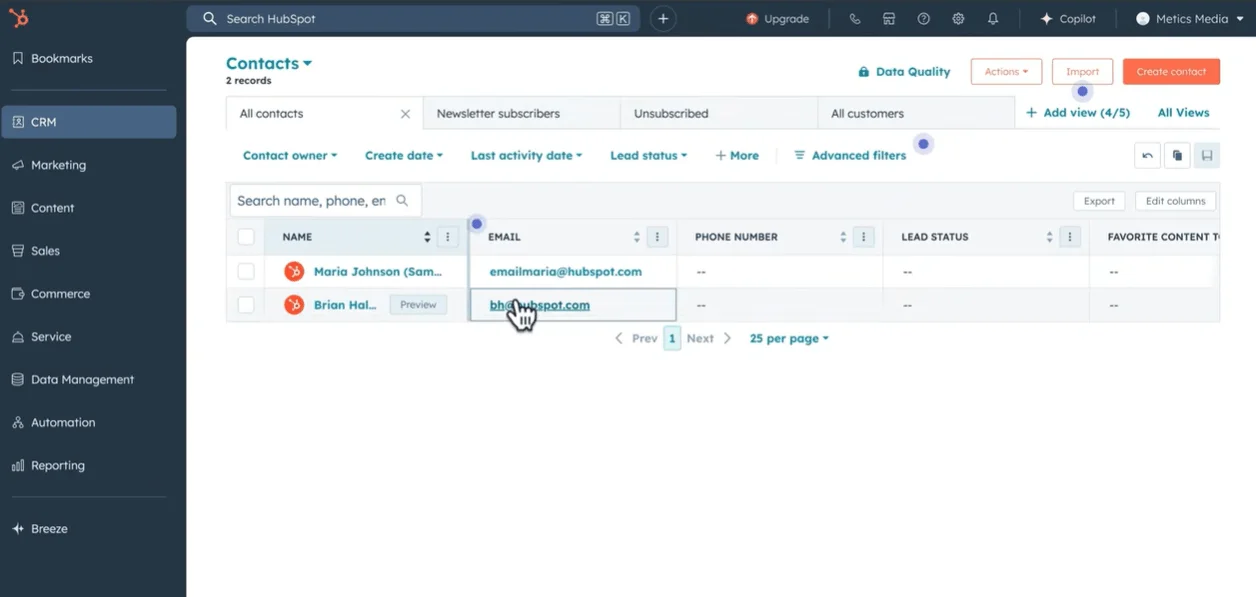
Best for: B2B and SaaS companies with a CRM-heavy sales process
Pros
- Native CRM to email attribution tied directly to closed revenue
- Breeze AI suite covers content generation, send time optimization, and predictive lead scoring
- Genuinely useful free CRM tier
- Provides analytics and reports for open rates, email click-through rates, conversion rates, and other important metrics.
Cons
- Steep jump in price from Starter to Professional
- Requires a dedicated admin at most organizations once automation is in use
- Overkill for a business that only needs a monthly newsletter
Pricing: Starter runs around $15 to $20 a month per seat. Professional jumps to roughly $890 a month. Enterprise runs into the thousands.
Migration difficulty: Medium to high, mostly because of how much data and workflow rebuilding the CRM integration involves.
Klaviyo
Klaviyo keeps coming up because it’s the platform most ecommerce brands already know by name. Segmentation runs deep, built off purchase history, browsing behavior, and predicted lifetime value. Its predictive analytics forecasts churn risk and expected next order date at the individual customer level.
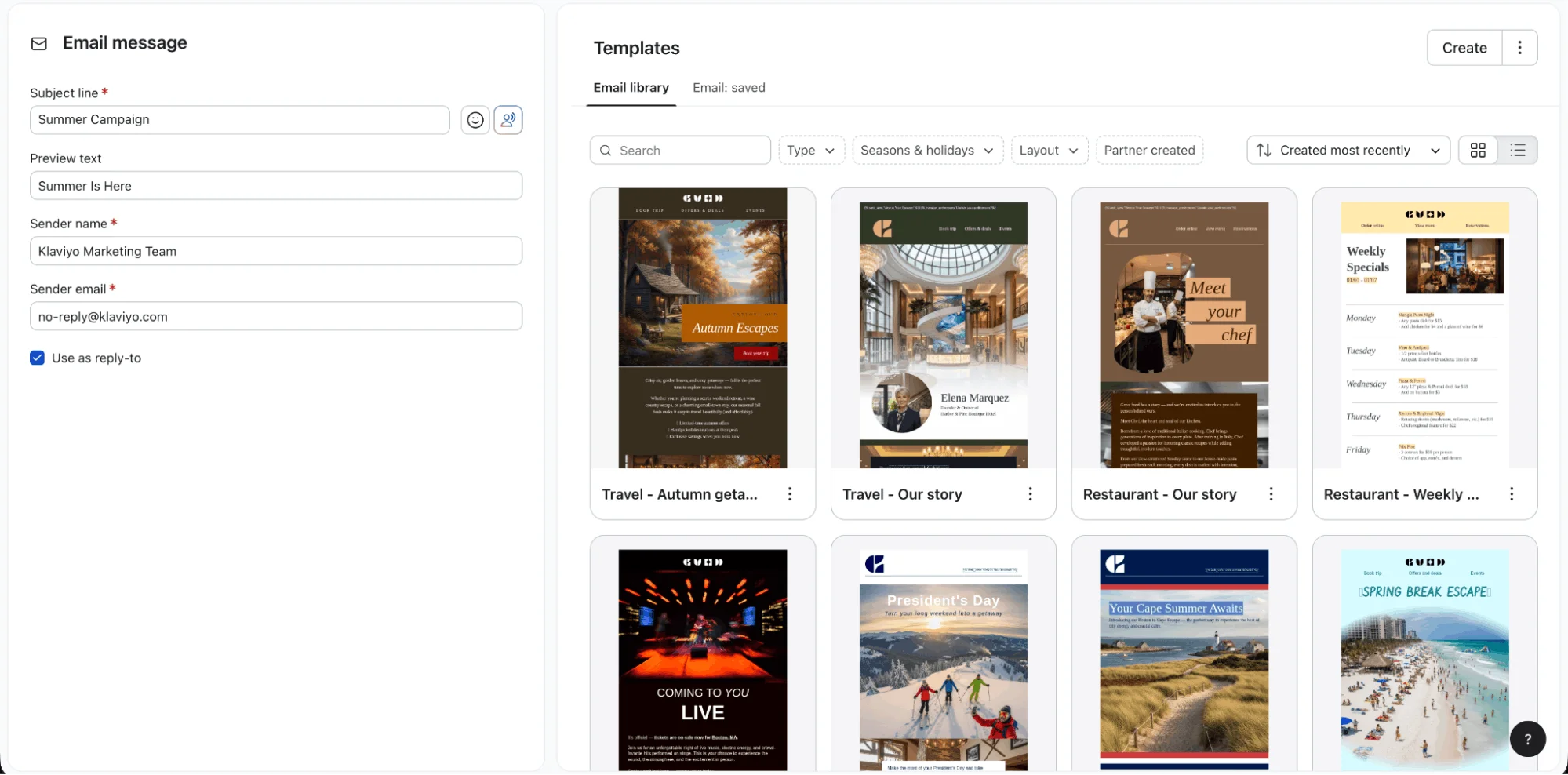
Best for: Larger ecommerce lists and enterprise Shopify Plus stores
Pros
- Deepest ecommerce segmentation of any platform on this list
- Users have access to diverse, pre-designed Klaviyo email templates
- Predictive analytics built into individual customer profiles to optimize email marketing strategy
- Strong SMS and email pairing
Cons
- Runs more expensive than Omnisend at 10,000 contacts and beyond for comparable functionality
- Steep learning curve for teams new to email marketing
Pricing: Starts around $20 a month for 500 contacts, climbing to $150 a month or more at 10,000 contacts.
Migration difficulty: Low for Shopify stores, given how mature the native integration is.
ActiveCampaign
ActiveCampaign is one of the best automation marketing platforms. The user-friendly design, 240+ templates, landing pages, forms, and it is suitable for businesses of all sizes and needs. It also offers a visual editor with well over a hundred triggers.
Active Intelligence, the platform’s AI layer, builds a persistent model of brand voice and engagement patterns over time. It can generate an entire workflow from a plain language description. For businesses evaluating a CRM with marketing automation built in, ActiveCampaign and HubSpot are the two most complete tools on this list.
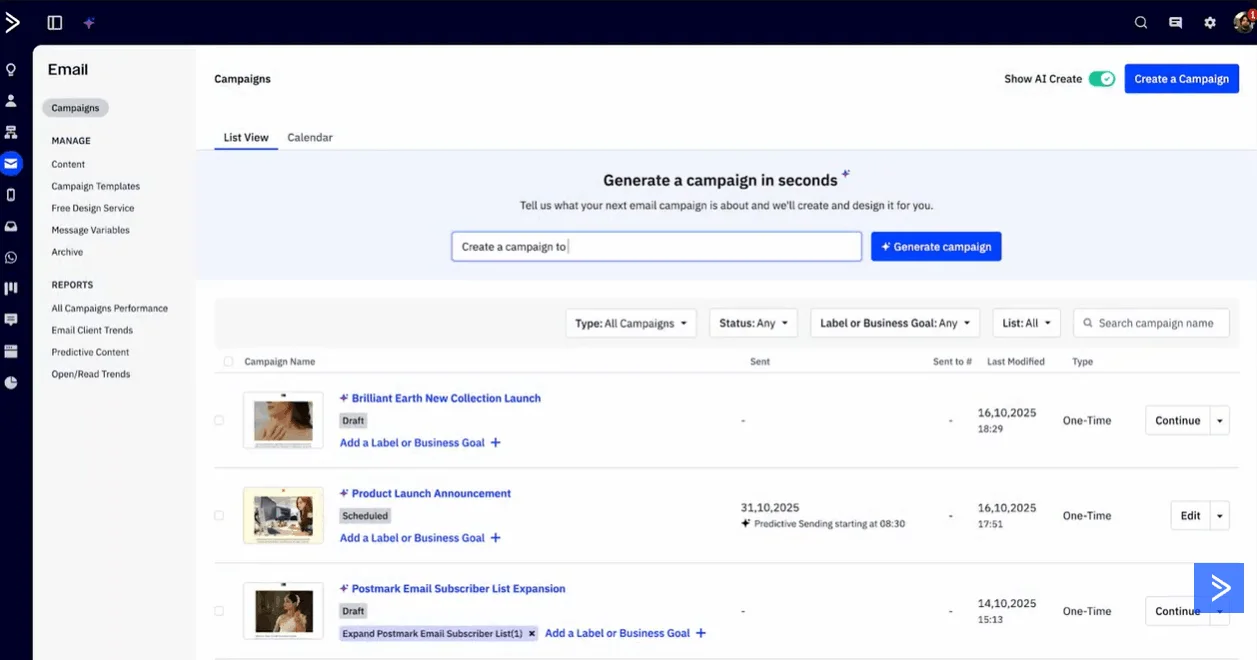
Best for: Agencies and businesses running complex, multi-step nurture sequences
Pros
- One of the most capable visual automation builders available
- Active Intelligence learns from your account data over time
- Built-in CRM
Cons
- No free plan, only a 14-day trial
- Price climbs steeply at higher contact tiers
- Real learning curve, typically a few weeks before a new user builds workflows independently
Pricing: Starts around $15–19/ month at 1,000 contacts, climbing to roughly $189 a month at 10,000 contacts.
Migration difficulty: Medium, largely due to the complexity of rebuilding advanced workflows rather than any technical barrier in the platform itself.
If you need something fully non-technical or you’re a solo creator with simple needs, then don’t opt for ActiveCampaign’s sophisticated automation.
Brevo
Brevo, previously Sendinblue, combines CRM and email tools. The pricing plans are based on email volume instead of contact count. The free plan, up to 300 emails a day with 100,000 contacts stored, covers a surprising number of small operations completely on its own.
Brevo also folds in SMS marketing, WhatsApp, and basic CRM. A small team can run several channels from one login. Businesses tend to outgrow it mainly when they need deeper automation or a larger email template library.
Best for: Small businesses and startups watching budget closely
Pros
- Free plan stores up to 100,000 contacts regardless of sending volume
- Predictable, volume-based pricing
- Basic AI writing assistant for subject lines and copy
Cons
- Smaller template library than most competitors
- Reporting is solid but not as detailed as pricier platforms
- Logo removal and some features require add-ons on lower tiers
Pricing: Starter begins at $9 a month for 5,000 emails. Standard begins at $18 a month for 5,000 emails and adds automation, A/B testing, and landing pages.
Migration difficulty: Low.
Mailchimp
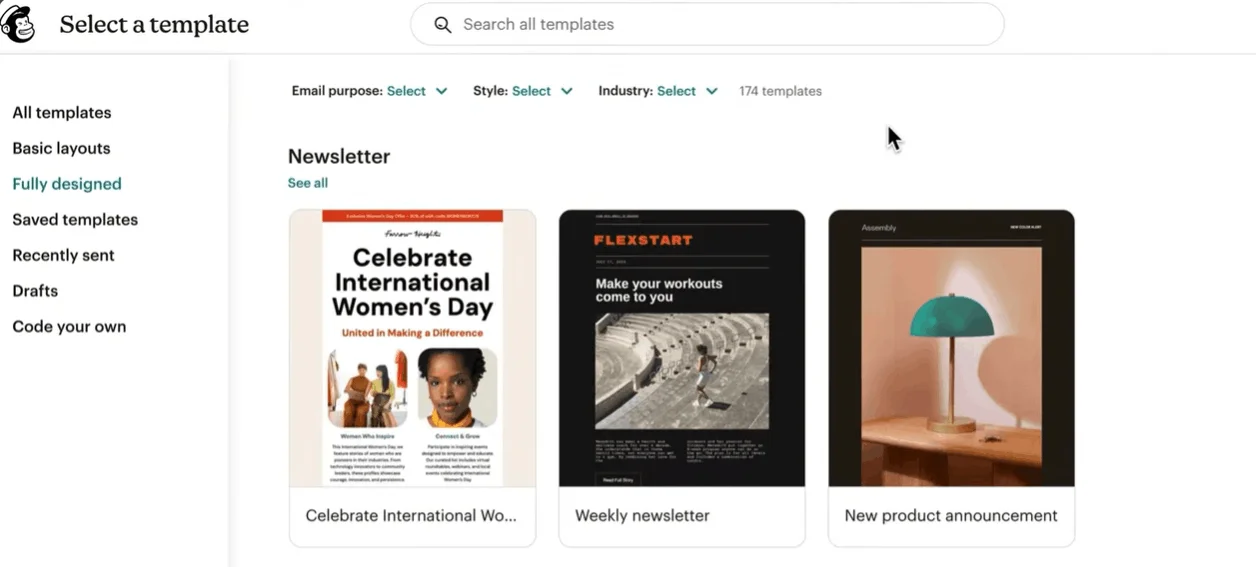
Mailchimp still comes up in almost every intake call, mostly because it’s the name people already know. The editor is easy to learn, and the template library is strong. The free plan has shrunk considerably over the past few years, now capped at around 250 contacts. The pricing climbs quickly once automation and segmentation are added.
Best for: Simple newsletters and beginners already familiar with the interface
Pros
- Easy to learn, strong template selection
- Wide range of third-party integrations
Cons
- Free plan has shrunk significantly in recent years
- Automation and segmentation are limited without upgrading
- Pricing scales up sharply as contact count grows
Pricing: Entry pricing runs $13–20/mo for 500 contacts, with costs climbing sharply from there.
Migration difficulty: Low, since Mailchimp’s export tools are straightforward and most competitors build direct import support for it.
Automation or advanced segmentation won’t be available with Mailchimp. MailerLite and Brevo are the two Mailchimp alternatives we recommend most often for that reason.
GetResponse
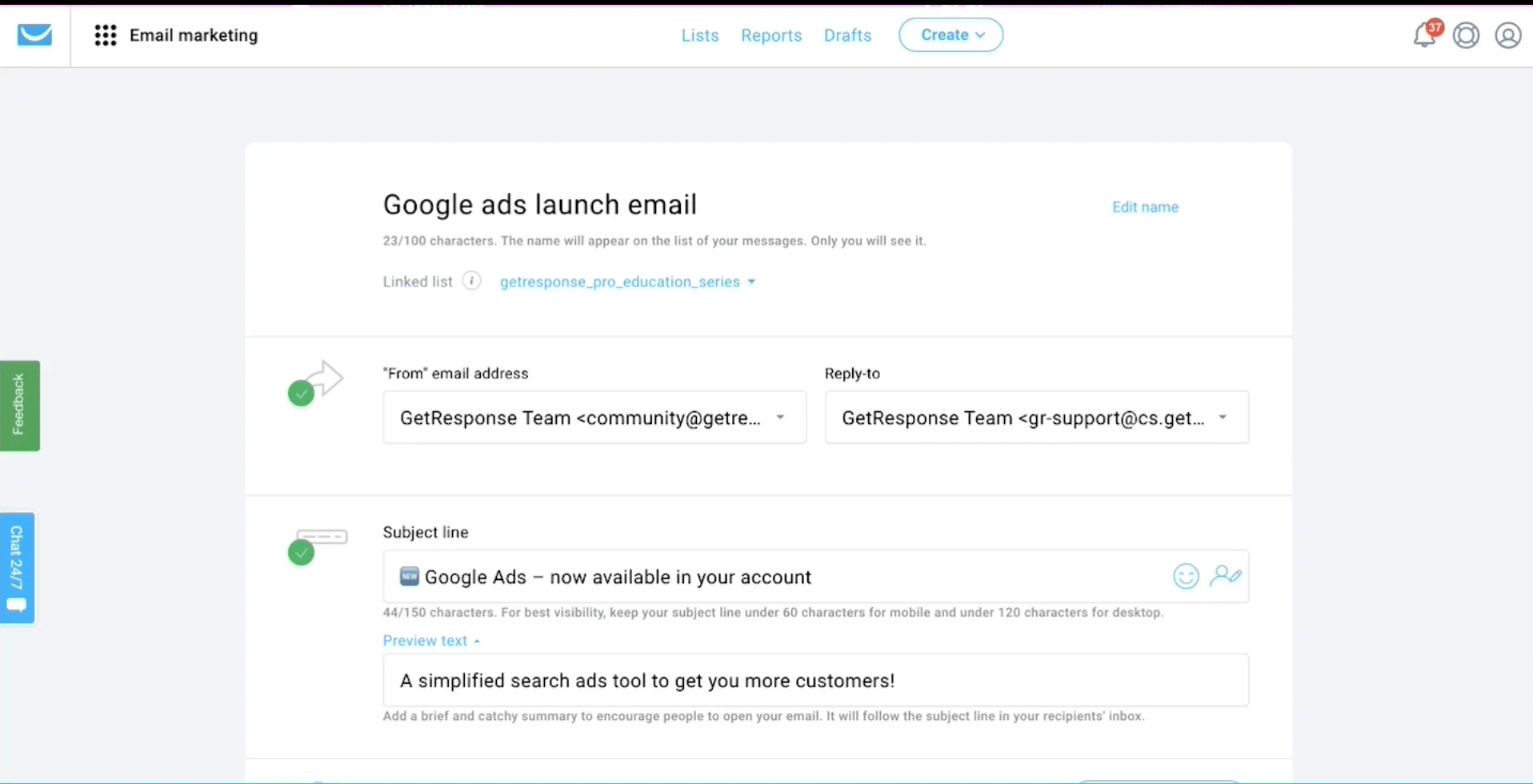
GetResponse email marketing tool doesn’t get the same attention as some names on this list, but its native webinar hosting is why it earns a spot. A business running regular webinars as part of lead generation gets that built into the same platform as the email automation.
Perfect Timing, its send time optimization feature, adjusts send times to when individual subscribers typically open email. Contact tagging, scoring, and web tracking are included, though there’s no deal pipeline behind them, so a business with a real sales motion still needs a separate CRM alongside it.
Best for: Businesses running regular webinars alongside email marketing
Pros
- Native webinar hosting, unusual among ESPs
- Perfect Timing send optimization is one of the more reliable features in this category
- Generous annual billing discount
Cons
- Broader feature set than most small businesses actually need
- Steeper learning curve than budget-focused competitors
Pricing: Starts around $19 a month for 1,000 contacts, rising to roughly $79 a month at 10,000 contacts.
Migration difficulty: Medium, mainly because of how the webinar and landing page tools get tied into existing workflows.
MailerLite
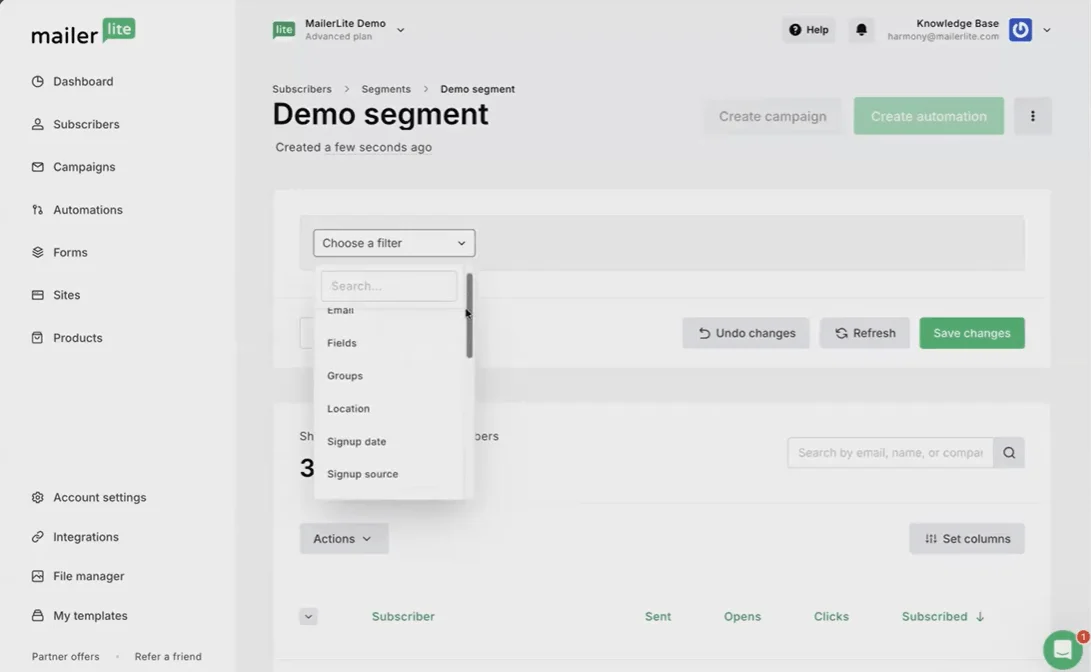
For freelancers and small teams without much bandwidth to learn a complicated system, MailerLite tends to be the fit. Its clean interface means a first automated welcome email sequence can be live within a single afternoon.
The free plan is down to 250 subscribers and 2,500 emails a month from 16 June 2026. Feature limits tied to that change, capping free accounts at three automations, three forms, and one landing page, are set to be enforced from 13 August 2026.
Best for: Solo marketers and local businesses without a dedicated email specialist
Pros
- Clean, low learning curve interface
- Automation and landing pages included even on paid entry tiers
- Unlimited monthly emails on paid plans
Cons
- The free plan subscriber limit is 250 subscribers and 2,500 emails a month
- Thinner template gallery than larger competitors
- Automation complexity caps out well below ActiveCampaign
Pricing: Comfort starts around $10 a month for 1,000 subscribers. Power starts around $18 to $20 a month for 1,000 subscribers.
Migration difficulty: Low.
Kit (ConvertKit)
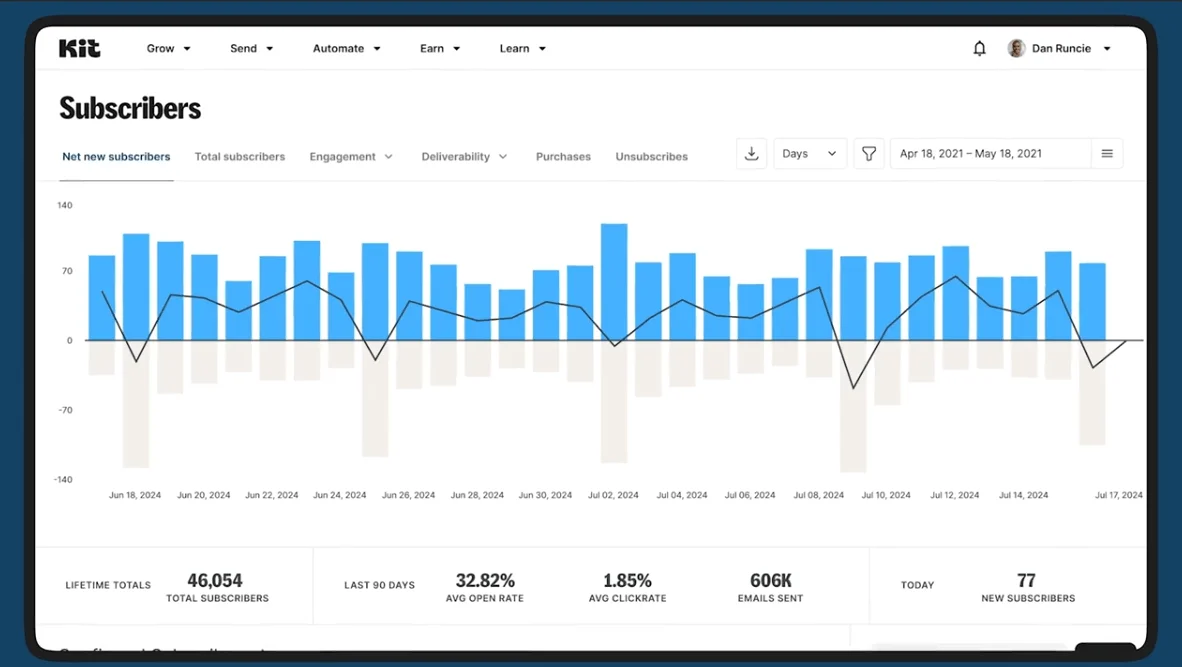
Kit built its reputation with bloggers, podcasters, and YouTubers. The free plan is generous, covering up to 10,000 subscribers with unlimited sends, and landing pages built for lead magnets convert.
Kit’s Creator Network lets users cross-promote through partnerships with other creators. The Sponsor Network helps creators find affiliate and brand partnerships directly inside the platform. Prices rose significantly in September 2025.
Best for: Creators building an audience around content
Pros
- Most generous free tier on this list at 10,000 subscribers
- Landing pages built specifically for lead magnet conversion
- Built-in tools for selling digital products and subscriptions
Cons
- Automation on the free tier is limited to a single sequence
- Paid pricing rose sharply in September 2025
- Design customization is more limited than general-purpose platforms
Pricing: Creator starts at $39 a month billed monthly, or $33 a month billed annually, for 1,000 subscribers. Creator Pro starts at $79 a month, billed monthly, or $66 a month annually.
Migration difficulty: Low to medium, depending on how many custom tags and sequences need to be rebuilt.
Moosend
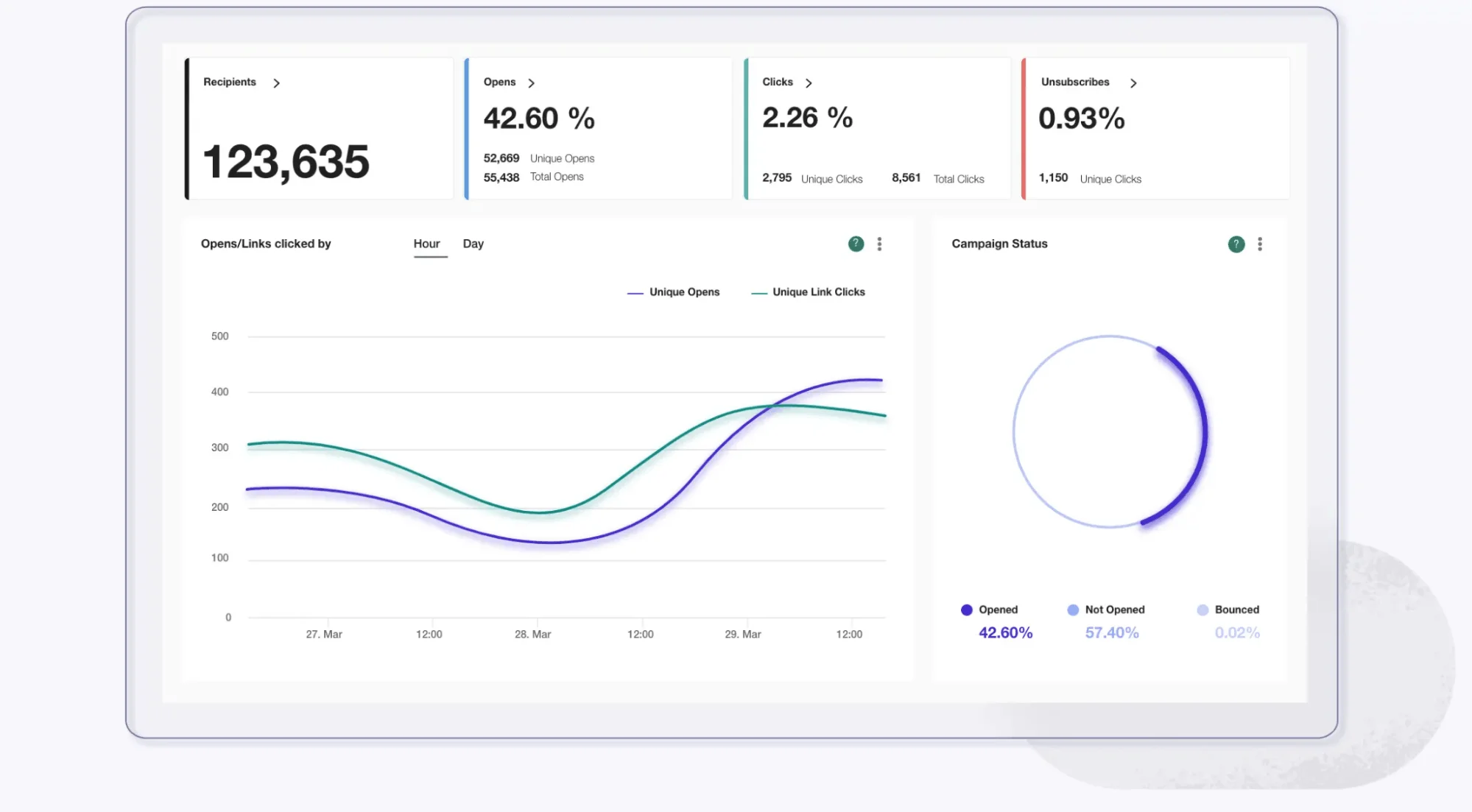
Moosend’s Pro plan includes unlimited email sends starting around $7 to $9 a month for 500 subscribers. Automation workflows cover standard use cases well, including welcome sequences, abandoned cart, and birthday emails.
The built-in AI Writer generates copy and subject lines, and for ecommerce accounts it also powers product recommendations inside campaigns.
Best for: Small businesses wanting unlimited sending at a low fixed cost
Pros
- Unlimited emails included even at the entry price point
- AI Writer and AI product recommendations included for personalized emails
- Straightforward condition-trigger action automation logic
Cons
- No permanent free plan, only a 30-day trial
- Smaller brand presence means fewer third-party integrations documented
Pricing: Starts around $9 a month for 500 subscribers.
Migration difficulty: Low.
Avoid if you need a permanent free plan or deep third-party integrations.
Constant Contact
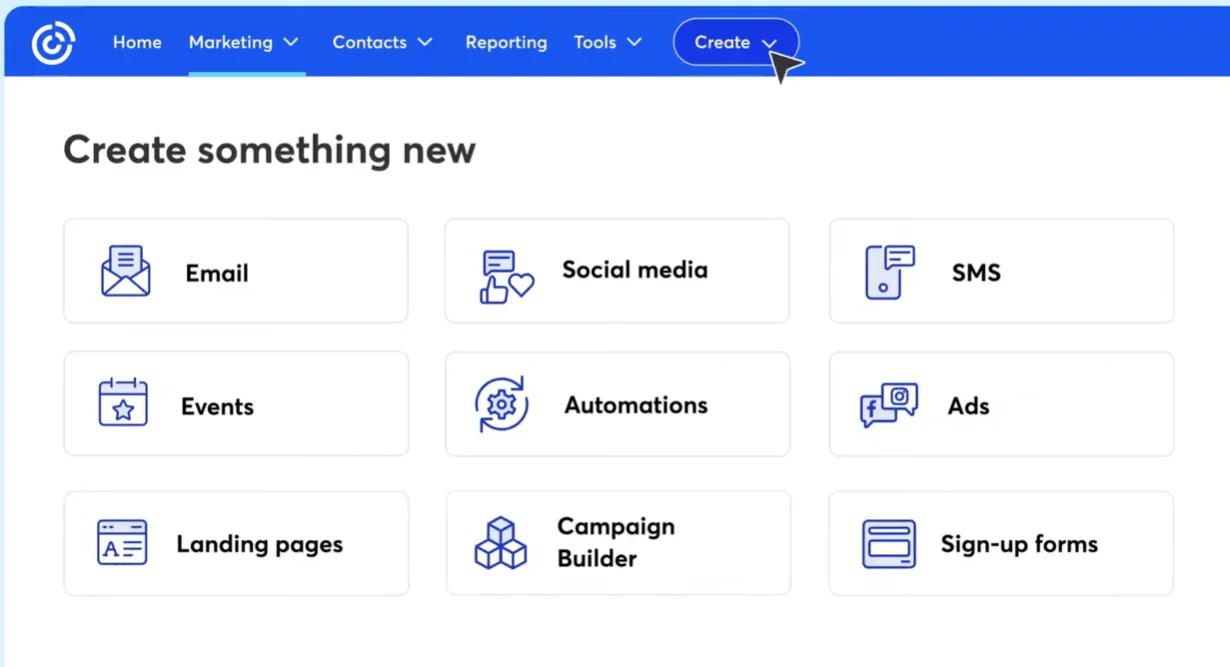
Constant Contact has been in the email marketing space for decades. Its RSVP and event management tools remain useful for organizations running webinars, fundraisers, or in-person events. The AI content generator produces emails, social posts, SMS copy, and landing pages from a single prompt.
Best for: Nonprofits and organizations running regular events
Pros
- RSVP and event management tools built directly into the platform
- AI content generator covers multiple formats, not just email
- Onboarding and import tools built for less technical users
Cons
- No permanent free plan, only a trial
- Automation is more limited compared to dedicated automation platforms
Pricing: Starts around $12 a month for 500 contacts, though pricing varies more than most competitors depending on plan and active promotion.
Migration difficulty: Low, since onboarding and import tools are built for less technical users.
AWeber
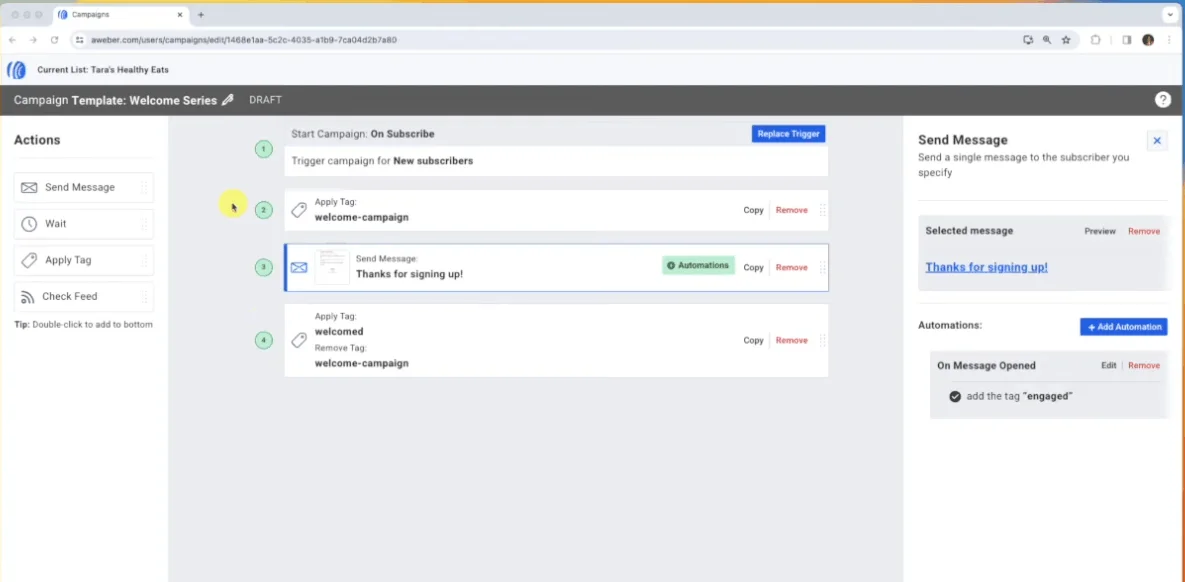
AWeber’s autoresponder and free plan make it an appealing email marketing solution. It covers up to 500 subscribers and 3,000 emails a month, with phone support included even at no cost.
The template library runs past 600 designs, and the AI-powered design assistant builds a branded template automatically from a business’s existing website.
Best for: Bloggers running a simple, sequence-based list
Pros
- Phone support included on the free plan
- AI-powered design assistant builds templates from your existing website and social accounts
Cons
- Automation is less sophisticated than ActiveCampaign or Brevo
- Fewer integrations than larger competitors
Pricing: Starts around $12.50–15/mo for 500 subscribers.
Migration difficulty: Low.
Sender
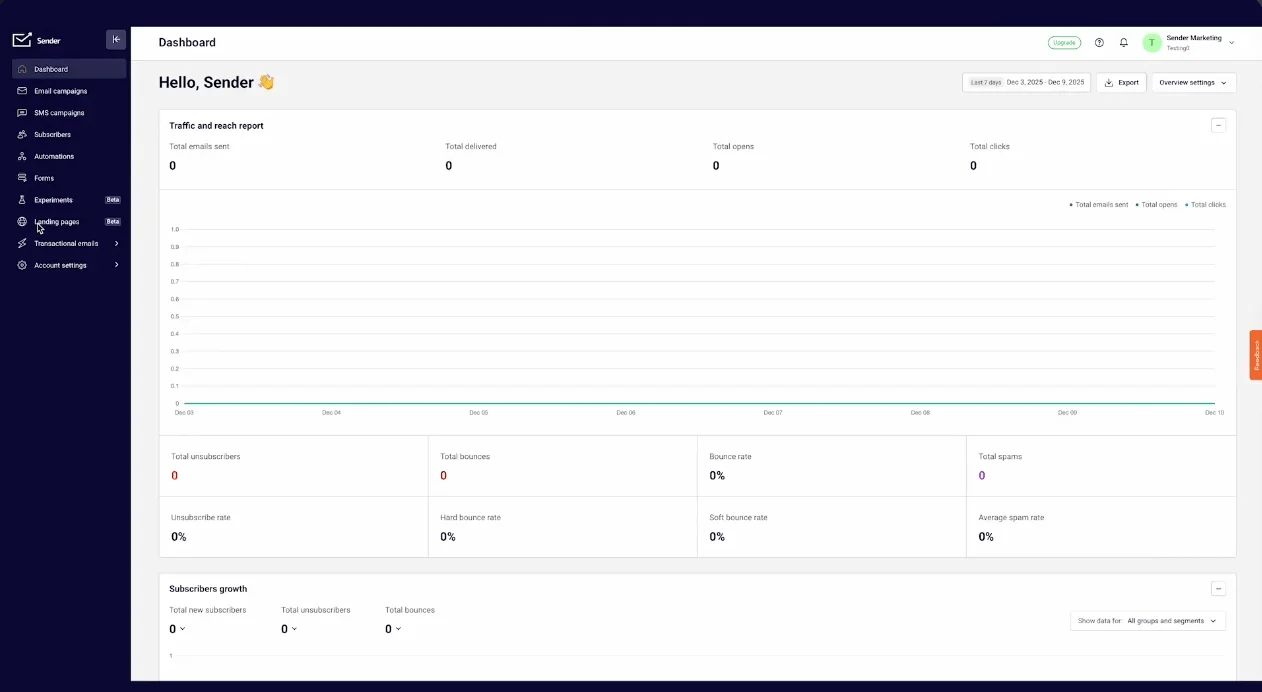
Sender’s free plan is one of the more generous available, covering 2,500 subscribers and 15,000 emails a month with full access to automation and segmentation. The drag-and-drop editor is functional but not the most polished on this list.
Best for: Small lists that want to stretch a free plan as far as possible
Pros
- Full automation and segmentation access even on the free plan
- Generous free contact and send limits relative to competitors
Cons
- Editor feels less polished than competitors at a similar price point
- No dedicated AI features
Pricing: Starts around $7 a month for 1,000 subscribers.
Migration difficulty: Low.
Lacks editor polish or AI features.
Beehiiv
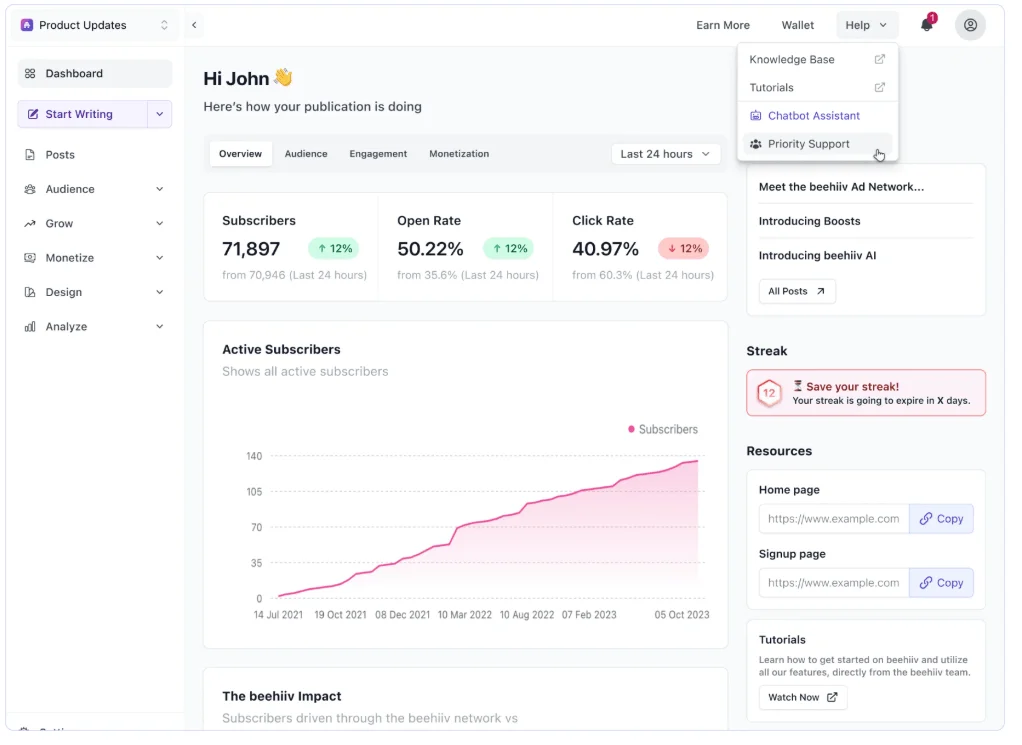
From what we’ve researched and tested, Beehiiv’s newsletter monetization tools stand out from the rest of this list. The free Launch plan covers 2,500 subscribers with unlimited sends and includes a website builder with custom domain support. Paid subscriptions include a 0 percent platform fee on higher tiers, a built-in ad network, and cross-promotion between newsletters.
Best for: Newsletter creators focused on monetization
Pros
- Paid subscriptions with no platform fee on Scale and Max plans
- Built-in ad network and cross-promotion tools
- Custom domain website builder included for free
Cons
- Automation is one of the bigger gaps on the free plan
- Beehiiv branding stays visible on emails until you upgrade
- AI features are basic and don’t learn from account data
Pricing: Scale plan starts around $43–49/mo for 1,000 subscribers.
Migration difficulty: Low to medium, depending on whether the website and monetization tools need to be rebuilt alongside the email migration.
Don’t choose Beehiiv if automation or brand-free sending matters more than monetization tools.
Mailjet
Mailjet offers unlimited contacts on Essential and Premium plans. Mailjet prices by sending volume instead of contact count. From our experience, this suits brands with a large contact base with moderate sending needs.
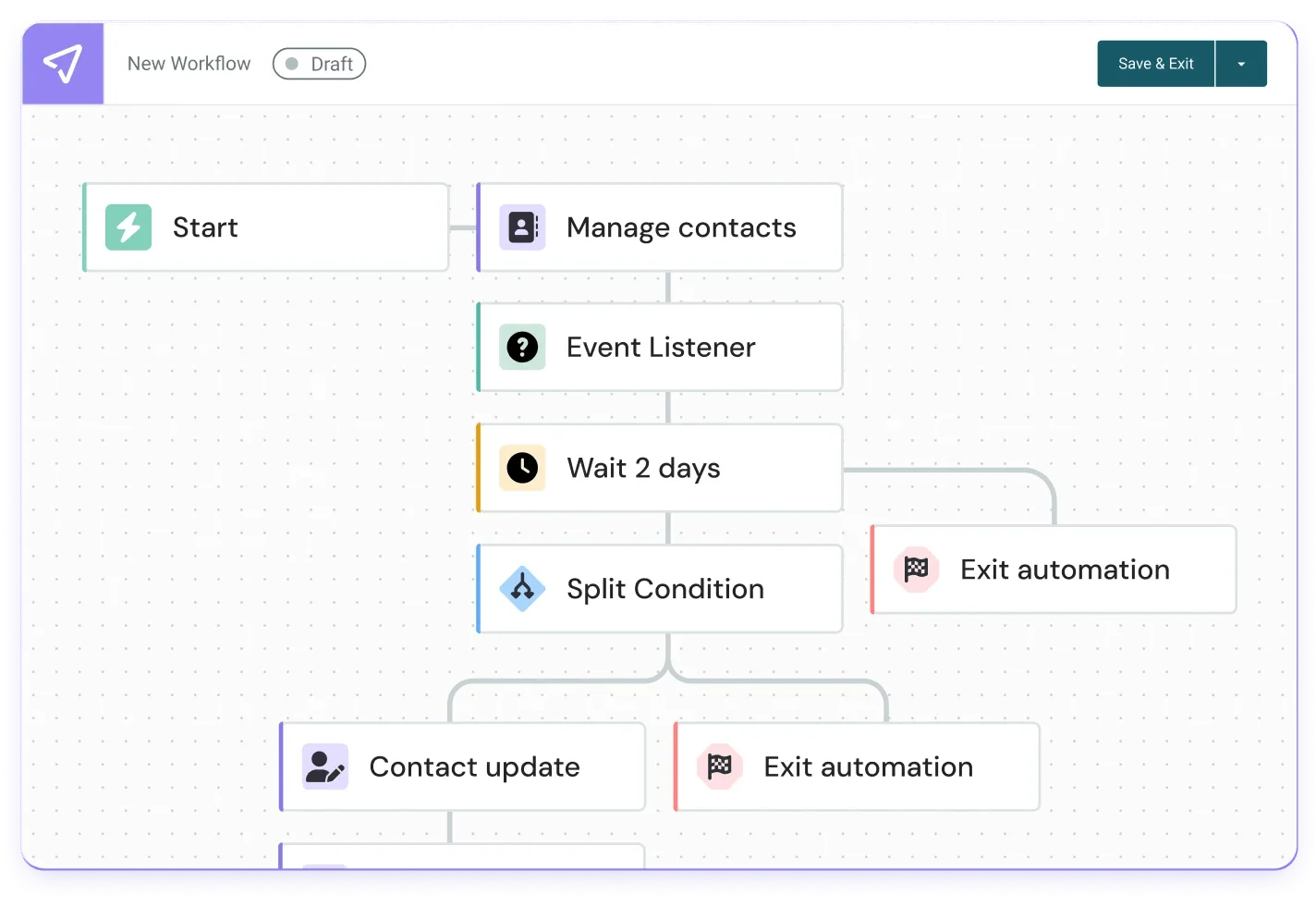
The platform combines standard marketing tools with a genuine SMTP and email API for transactional sending. Its real-time collaboration lets more than one person edit a campaign at once.
Best for: Newsletters and businesses needing combined marketing and transactional email
Pros
- Unlimited contacts on Essential and Premium plans
- Built-in email validation
- Marketing and transactional email in one tool
- Real-time collaboration
Cons
- Fewer automation templates than automation-focused competitors
- Contact limits still apply on the Starter tier
Pricing: Starter $9/mo for 2,000 contacts and 8,000 emails; free plan includes 1,000 contacts and 6,000 emails.
Campaigner
Campaigner email marketing tool is built for teams that want email and SMS marketing running through the same automation engine. Reusable content blocks work like mini-templates that drop into a campaign. They pair well with dynamic content when a send needs to look different for different segments.
Best for: Mid-sized businesses running combined email and SMS marketing campaigns
Pros
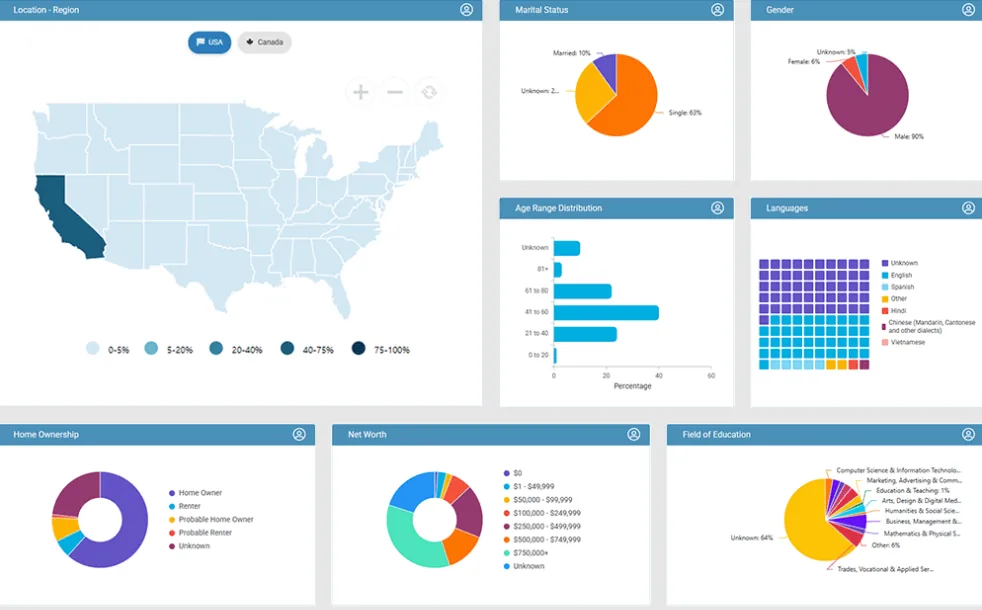
- Dynamic content personalization
- Reputation management tools built in
- Ecommerce plan bundles Shopify and Magento integrations with unlimited contacts
Cons
- Pricing has shifted noticeably in recent months and varies by source
- SMS add-on is US and Canada only
Pricing: The entry tier ranges from $14 to $59/mo depending on the plan and billing term; ecommerce plan starts around $80/mo.
Campaigner doesn’t help if you need SMS marketing outside North America or predictable, stable pricing to plan around.
Benchmark Email
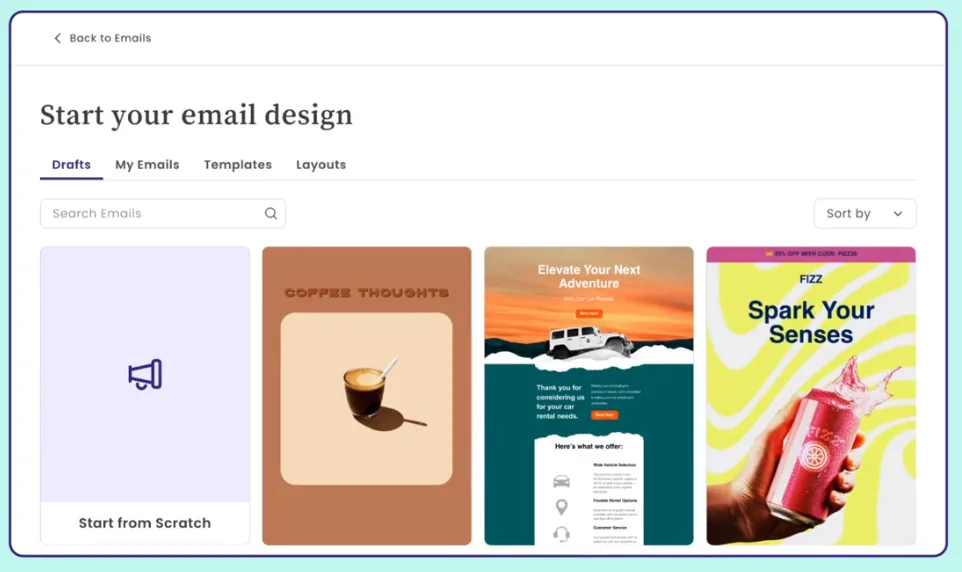
Benchmark Email is built for a marketer who wants to write a campaign and send it without learning a platform first. Every plan includes the same feature set, so nothing is gated behind a higher tier the way it is with most competitors on this list.
Best for: Small businesses that want simple, template-driven sending without a learning curve
Pros
- Full feature access on every plan, including the free tier
- No per-feature upsells
- Straightforward, predictable pricing by contact count
Cons
- Automation has been removed from the platform entirely as of recent updates
- Poor fit for anyone who needs triggered sequences
Pricing: free for 500 contacts and 3,500 emails/mo; Pro plans start somewhere between $19 and $37/mo for 2,500 contacts depending on the current promotion.
Best Email Marketing Platform Feature Comparison
| Platform | Automation | CRM status | Landing pages / sites | SMS | Ecommerce features | AI features |
| Omnisend | Yes — strong, branching, multi-step | None (external CRM only) | Yes — native landing pages/forms | Yes — native, integrated in workflows | Native/advanced ecommerce (Shopify, Woo, etc.) | Yes — copy, optimisation |
| HubSpot | Yes — full workflow builder (Pro+) | Native CRM (contacts, deals, pipelines, free tier) | Yes — native landing page/site builder | Limited — native add-on (Pro/Enterprise) | Via integrations (Shopify, Woo, etc.) | Yes — AI across tools |
| Klaviyo | Yes — strong, branching, predictive | None (contact management; no full CRM) | Yes — native landing pages (Website → Landing pages) | Yes — native, integrated | Native/advanced ecommerce (deep store data) | Yes — predictive & creative |
| ActiveCampaign | Yes — very deep, complex journeys | Limited CRM — deals/pipelines via paid add-ons | Yes — landing pages/forms on Plus+ | Limited — paid add-on (Plus/Pro/Ent.) | Via integrations (Shopify, Woo, etc.) | Yes |
| Brevo | Yes — moderate automation | Native basic CRM (contacts, deals, tasks) | Yes — landing pages/forms | Yes — basic SMS | Via integrations | Limited — basic writing AI |
| Mailchimp | Limited — basic; strong only on paid | None (no real CRM, contact list only) | Yes — landing pages via website/LP builder | Limited — paid add-on | Via integrations (Shopify, Woo, etc.) | Limited |
| GetResponse | Yes — moderate (from Marketer plan) | Limited CRM — scoring/tagging on higher tiers | Yes — landing pages and full-page builder | Limited — top plans only | Via integrations | Yes |
| MailerLite | Limited — single sequence on free, fuller on paid | None | Yes — sites/landing pages | No native SMS | Via integrations | Limited |
| Kit (ConvertKit) | Limited — simple sequences | None | Yes — landing pages/forms | No native SMS | Native/basic commerce (digital products, subscriptions) | Limited |
| Moosend | Yes — moderate automation | None — CRM only via 3rd party | Yes — landing pages/forms | No native SMS (via connected CRM only) | Via integrations | Yes |
| Constant Contact | Limited — from basic to fuller tiers | None | Yes — landing pages/forms | Limited — US only, paid add-on | Not available (no built-in store engine) | Yes |
| AWeber | Limited — basic autoresponders | None | Yes — landing pages/forms | No native SMS | Not available | Limited |
| Sender | Yes — moderate automation | None | Limited — simple forms/pages | Yes — native SMS | Not available | No |
| Beehiiv | Limited — no automation on free tier | None | Yes — via built-in website, single-field email forms | No native SMS | Not available (newsletter-first) | Limited |
| Mailjet | Limited — Premium plan only | None | Limited — Premium-only landing pages | No native SMS | Not available | Limited |
| Campaigner | Yes — strong automation | None | Yes — landing pages/forms | Yes — US/Canada only | Via integrations | No |
| Benchmark Email | No automation | None | Yes — landing pages/forms | No native SMS | Not available | Limited |
The Best Email Marketing Platform for Your Industry
Best email marketing services with CRM
A CRM tied to email marketing matters most when a business needs to trace a subscriber all the way to a closed sale.
- HubSpot keeps the CRM and the email tool in the same system, so a specific campaign can be tied directly to the pipeline it generated.
- ActiveCampaign pairs its built-in CRM with automation deep enough to hand a contact from marketing to sales the moment engagement crosses a threshold.
Best email marketing tools for Shopify stores
Shopify stores need an ESP that reads store activity directly.
- Omnisend connects to Shopify with a setup close to plug-and-play, and its automations, abandoned cart, browse abandonment, post-purchase, fire directly off store events.
- Klaviyo’s deeper Shopify Plus integration and predictive analytics suit stores with enough volume to justify the higher price
Best email marketing services for small businesses
Across the migrations we’ve handled, the pattern is consistent. Small businesses often sign up for sophisticated email marketing platforms without actually using the features they paid for.
- Brevo folds email, SMS, and basic CRM into a single login
- A first automated welcome sequence in MailerLite can go live within an afternoon
- Every feature on Moosend ships on its one paid tier
Best email marketing platforms for ecommerce
Ecommerce email marketing runs on timing. The email marketing platforms that perform best trigger automatically off customer behaviour, an abandoned cart, a browse without a purchase, a first order, so a workflow fires within minutes of the action itself.
- Omnisend builds its automations directly around these store events
- Klaviyo’s predictive analytics go a step further, flagging a customer’s likely next order date before that customer has gone quiet
- ActiveCampaign suits a narrower case: a brand where the same contact record needs to trigger both a marketing email and a sales follow-up
Best free and cheap email marketing services
A generous free plan matters that also allows you to scale your email marketing campaign with ease.
- Brevo’s free tier stores up to 100,000 contacts
- Kit’s free plan is built for someone actively growing an audience, with a 10,000-subscriber ceiling generous enough to build real momentum before touching a credit card
- Benchmark Email includes its available campaign-creation and list-management features on the free plan, but it isn’t suitable for a business that needs automation.
- Sender offers a generous free-to-paid path, while Moosend keeps the move from trial to paid relatively affordable.
Best email marketing software for newsletters
Newsletter writers increasingly need a platform that handles monetization directly.
- Beehiiv builds paid subscriptions, an ad network, and cross-promotion between newsletters into the core product
- Kit answers a related need through its Creator Network, which turns other creators’ audiences into a growth channel for building a following
- MailerLite suits the writer who hasn’t reached monetization yet and may never need to
Best email marketing platforms for affiliate marketers
Affiliate marketers face a specific risk with ESPs: several platforms restrict or prohibit affiliate links in their terms of service, sometimes only discovered after a list has already been built on the platform.
- GetResponse explicitly permits affiliate marketing, and its send time optimization and contact scoring help a link land at the moment a subscriber is most likely to act on it.
- Moosend fits the smaller-scale version of the same need, since its low fixed cost means a side-hustle affiliate marketer isn’t paying enterprise-list pricing for a fraction of that list size.
Best Email Marketing Software by Company Size
Solo creator: MailerLite, Kit, or Beehiiv, depending on whether the priority is simplicity, audience growth, or monetization.
Small businesses, 1 to 10 employees: Brevo, MailerLite, or Moosend for low cost with enough automation to cover the basics.
Growing ecommerce: Start with Omnisend, then move to Klaviyo.
Mid-market: ActiveCampaign for automation-heavy operations and HubSpot, where the sales team needs a CRM tied to email performance.
Enterprise: Klaviyo or HubSpot, chosen based on whether the priority is ecommerce depth or CRM-driven attribution. Typically involves a migration partner given the scale of the workflows and integrations at that size.
Why Businesses Switch Email Marketing Platforms
Most email marketing platform migrations trace back to one of a few recurring problems: automation the business has outgrown; rising platform costs as a list scales past what the original pricing tier anticipated; poor deliverability; and the hidden costs of the switch itself.
RC Juice is the clearest example we’ve handled of the integration problem. An outdated Magento version paired with an ESP that couldn’t connect to it meant lost visibility into campaign revenue, plus a chunk of the subscriber list quietly not receiving emails at all. The fix was a migration to a platform with a native integration, synced through the old system’s API to preserve list history, at a fraction of the cost of rebuilding the ecommerce platform itself.
Beyond the subscription cost, switching carries hidden costs worth planning for:
| Hidden Cost | What It Actually Involves | Typical Impact |
| List cleanup | Removing invalid, bounced, or unengaged addresses before migration | Improves deliverability but takes time before the new platform goes live |
| Template rebuilding | Recreating email designs in the new platform’s editor | Design work that rarely transfers cleanly between ESPs |
| Automation rebuilding | Reconstructing flows, triggers, and logic from scratch | Often the single biggest time cost in any migration |
| Team training | Getting marketers comfortable with a new interface | Can slow campaign output for weeks depending on platform complexity |
| Data loss risk | Historical campaign and revenue data not transferring cleanly | Sometimes requires custom API work to preserve, as with the RC Juice migration |
Why Email Deliverability Matters When Choosing an Email Marketing Platform
Email marketing tool choice alone doesn’t decide whether an email reaches the inbox. Authentication through SPF, DKIM, and DMARC, along with list quality, subscriber engagement, and consistent sending practices, has a bigger impact.
We’ve seen brands migrate to a more expensive, more capable ESP and still land in spam because nobody addressed the authentication setup, did the deliverability check, or addressed the years of unengaged addresses sitting on their list.
This is part of why ESP selection shouldn’t happen in isolation. We offer ESP vendor evaluation and migration as a standalone service specifically because choosing the right email marketing software is only half the equation. The other half is setting it up correctly.
FAQs
Is there a genuinely good free email marketing plan out there?
Yes, several. Brevo’s free tier allows up to 300 emails a day with contact storage up to 100,000. Kit’s free plan covers 10,000 subscribers with unlimited sends. Benchmark Email’s free plan includes 500 contacts and 3,500 emails a month with full feature access. Sender offers 2,500 subscribers and 15,000 emails a month with full automation access.
Is Mailchimp still worth using?
For very small lists doing basic newsletters, it still functions fine. Once automation and segmentation become priorities, the platform shows its limits quickly.
How much should you expect to pay for email marketing software?
For a list around 1,000 contacts, most platforms land between free and $50 a month. The real differences show up past 10,000 contacts, where the gap between platforms like Omnisend and Klaviyo can run into hundreds of dollars a month.
Are email marketing software, newsletter software, and email marketing platforms different things?
Not in any meaningful sense. Vendors use whichever term tests best on their pricing page. The one distinction worth knowing is that email marketing services sometimes refers to a managed service, an agency running campaigns on a business’s behalf, which is a different purchase from software used directly.
How long does an ESP migration take?
Most single platform migrations take two to four weeks from kickoff to full cutover, depending on list size and how many automations need rebuilding. Migrations involving CRM integrations or ecommerce syncing take longer.
How long before campaigns are live after switching email marketing tools?
Basic sending can usually start within the first few days, often before the full automation rebuild is finished. Core flows like the welcome series and abandoned cart typically go live first, with deeper segmentation layered in over the following weeks.
Which email marketing platforms are easiest to learn?
MailerLite, Brevo, and Moosend tend to have the shortest learning curve for teams without a dedicated email specialist. Kit is straightforward for creators specifically, and Sender’s simplicity makes it approachable despite a less polished editor. ActiveCampaign and HubSpot take longer, generally a few weeks before a new team member is building workflows independently.
Choosing the Right Email Marketing Platform for Your Business
An email marketing service earns its keep by fitting how your team or email marketing agency actually works day to day, from template production to email strategy. RC Juice avoided a $50,000 rebuild by choosing the right ESP instead of forcing a fix through their outdated ecommerce platform. London Store, our ecommerce client, unlocked four markets from a single dashboard once they moved off a platform that had quietly stopped fitting their business.
If you’re staring down a migration or trying to figure out which of these platforms fits your list, that’s the exact conversation we have with clients every week. We’re happy to walk through your specific situation if you want a second opinion before committing to anything.